Spring is here. The fruit trees are blooming. It’s pretty, sure. Seeing chickens pecking around under the branches feels like a natural, idyllic moment. You want to let them loose. The logic seems sound. Let them eat the pests. Keep the yard clean. It’s a zero-waste dream.
But there’s a catch. A big one.
Right now, as the sap rises and the ground thaws, many homeowners are spraying their orchards. They are trying to stop fungus. They are trying to save the peaches and apples. The product they use is likely copper-based. It’s called Bordeaux mixture. It’s standard practice. It’s also toxic to your birds.
If you let your hens scratch under treated trees in early spring, you are feeding them poison. Here is why that happens and how to stop it before it’s too late.
The Trap of Early Spring Foraging
How Chickens Kill the Carpocapsid
Winter is when the dormant phase for pests begins. The carpocapsid moth lays its eggs or larvae in the soil under fruit trees. These larvae will burrow up later to ruin your fruit harvest.
Chickens are excellent at this. They are natural foragers. They scratch the earth aggressively. If you let them roam now, they will dig up those larvae. They will eat them. This reduces the pest population for the summer. It’s effective. It’s free. It’s also risky if the ground has been treated.
Natural Weed Control
Before buds fully open, the soil is exposed. Chickens aerate the top layer of soil. They eat weeds. They drop manure, adding nitrogen. It’s an eco-friendly maintenance method. No gas-powered trimmers. No chemical herbicides. Just birds and dirt.
This method works well for organic gardens. It maintains balance. But it only works if the soil is clean. If the soil is contaminated, the birds become the vectors for that contamination.
The Invisible Threat: Bordeaux Mixture
Treating Peach Blister
Spring is the critical window for treating peach leaf curl. This fungal disease deforms young leaves. If you don’t treat it, you lose the crop. The standard prevention is Bordeaux mixture. It’s a blue powder. It’s copper sulfate mixed with lime. It’s sprayed on the trees as a preventive measure.
It’s widely available. It’s traditional. It’s effective against the fungus. But it leaves a residue.
Copper Accumulation in Topsoil
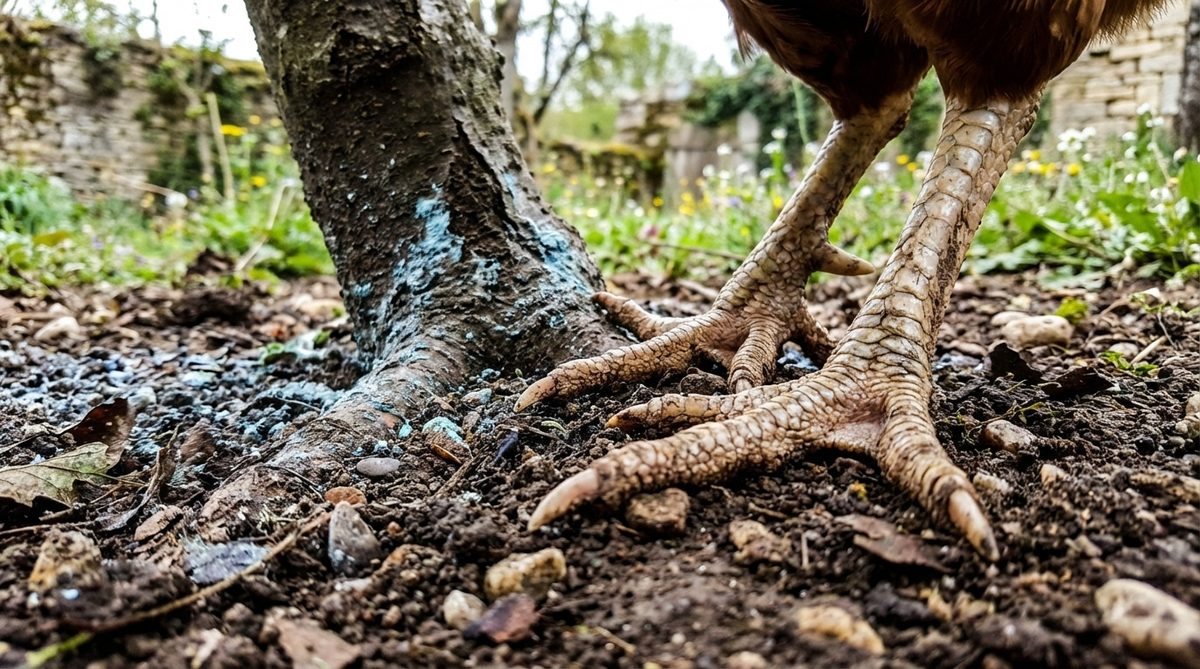
Bordeaux mixture contains high concentrations of copper. It’s a heavy metal. When it rains, the spray washes off the leaves and branches. It drips into the soil directly beneath the canopy.
The copper settles in the top few centimeters of earth. This is the exact layer chickens scratch. They dig for worms. They dig for grubs. They dig right into the chemical residue. The ground becomes a toxic carpet. You can’t see it. You can’t smell it. But it’s there.
The Health Risk to Your Flock
Silent Poisoning
Chickens don’t know what copper is. They know what food is. They peck at the ground. They swallow small bits of dirt. They eat earthworms that have burrowed into the treated soil.
Over time, copper accumulates in their digestive systems. It stresses their livers. It damages their internal organs. This isn’t a quick death. It’s a slow decline. Their health deteriorates day by day.
Impact on Eggs and Energy
The effects are visible. Your hens might become lethargic. They may lose their appetite. Their droppings could change color or consistency. But the damage goes deeper.
Copper residues enter their metabolism. They end up in the eggs. If you eat those eggs, you are ingesting those metals too. It compromises the safety of your breakfast. It compromises the vitality of your flock.
Protecting Your Orchard and Your Birds
You don’t have to choose between a healthy orchard and healthy chickens. You just have to time it right.
Timing Your Treatments
Avoid spraying when birds have access to the soil. If you use copper-based fungicides, apply them when the trees are dormant in late winter or after the harvest in late autumn. Do not spray in early spring if your birds can reach the ground.
Physical Barriers
If you must treat in spring, use physical barriers. Install chicken wire around the base of the trees. Keep the birds out of the drip line. It’s tedious. It takes effort. But it prevents the direct ingestion of contaminated soil.
Alternative Fungicides
Consider non-copper alternatives. Neem oil works for some pests. Sulfur-based sprays are options, though they also have restrictions. Read the labels carefully. Look for treatments that break down quickly or don’t persist in the topsoil.
Monitoring Soil Health
Test your soil if you suspect contamination. If you’ve used copper-based treatments in the past, the metal may still be present. Chickens are sensitive to it. If you notice signs of illness in your flock, remove them from the area immediately.
The Bottom Line
The instinct to let nature take its course is strong. Chickens cleaning up pests under fruit trees is a beautiful image. It’s also a dangerous one if the trees have been treated. Copper doesn’t disappear. It stays in the dirt. Your birds will dig it up. They will eat it.
Stay vigilant. Check your spray schedule. Watch your birds. The cost of treatment is nothing compared to the health of your flock and the safety of your food.
How long to wait after Bordeaux mixture to protect chickens
You love your chickens. You also want fruit that doesn’t taste like copper. But spraying the “Bordeaux mixture” isn’t a free-for-all. If you let the hens scratch around immediately after application, you’re gambling with their health.
The rule is simple. Wait six to eight weeks after your last spray.
This isn’t a suggestion. It’s a hard limit. The copper in the mixture needs time to bind to the soil or get washed away by natural rain. If you rush this, the birds get exposed to concentrated chemicals when they forage.
Spring rains help here. They leach the copper deeper into the ground or off the leaves. This reduces the risk of direct contact. But don’t rely on rain alone. You need a physical barrier.
Barriers to keep chickens away from treated trees
While that six-to-eight-week window ticks away, you must physically block access. The goal is to stop them from pecking at treated bark or scratching up treated soil.
You don’t need expensive gear. Basic materials work fine.
- Chicken wire: Wrap standard gauge wire around the trunk. Make it at least 50 centimeters high. This stops them from getting too close to the trunk and the lower branches where residue lingers.
- Wooden stakes and netting: Drive sturdy stakes into the ground in a circle around the tree. Pull a protective net tight between them. This creates a fence line they won’t cross.
- Mulch barriers: Lay down a thick layer of coarse bark chips or wood chips. It’s unappealing to their sensitive feet and discourages frantic scratching.
These methods are temporary. They’re cheap. They’re effective. They keep the flock out of the danger zone while the treatment works its way out of the ecosystem.
Balancing orchard care and flock safety
There’s a rhythm to this.
In late winter, you might let the hens out early to scratch for dormant pests. That’s good. It’s natural pest control. But before you start the spring copper treatments, you pull them back.
It requires anticipation. You have to plan your calendar around the spray schedule.
Once the treatment period has passed, and the rains have done their job, you can reopen the gates. The copper levels will be safe. The soil structure will have settled. The birds can return to their domain without risk.
This isn’t about choosing between healthy trees and healthy birds. It’s about timing.
You can have both. You just have to manage the space.
The long-term payoff
When you get this right, the benefits compound.
Your fruit trees stay healthy from fungal diseases. Your chickens stay healthy from chemical exposure. You end up with clean eggs and clean fruit.
It’s not magic. It’s basic agronomy mixed with common sense.
Most gardeners skip the wait. They see a spot on a leaf and spray again the next day, ignoring the flock below. That’s a mistake. The copper doesn’t vanish overnight. It builds up.
By respecting the six to eight week quarantine, you preserve the soil’s microbial life. You keep your birds safe. You ensure the next harvest is edible.
It’s a small effort. A physical barrier. A calendar check.
But the result is a garden that breathes. A flock that thrives. And fruit that actually tastes like summer.
So, look at your trees. Check your spray logs. When was the last time you applied anything?
If it’s been less than two months, build a fence. Wait it out.
The birds will thank you. The fruit will too.