Millions of French households pour down cloudy, starchy water every single evening. It’s an automatic gesture. A wasted opportunity. That steaming liquid, dumped right on the weeds lining your driveway, destroys them in less than 48 hours. No chemicals. No effort. No cost. It is likely the most accessible weed killer available, yet almost no one uses it.
The chemistry is simple but brutal. You get a triple threat: thermal shock, oxygen deprivation, and osmotic dehydration.
The Science in the Pot
Why does this work? It isn’t magic. It’s basic plant biology being dismantled by heat and starch.
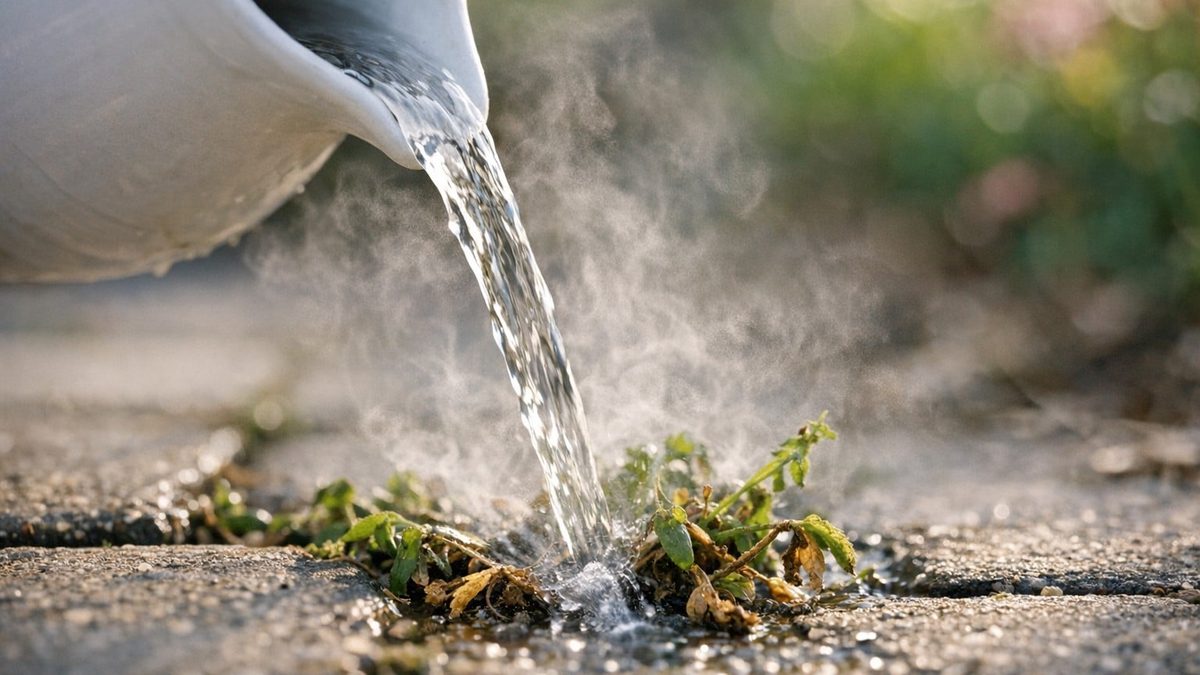
First, there is the heat. When you pour boiling water onto unwanted plants, it causes violent thermal shock. This destroys cellular structures instantly. It works on the exact same principle as those gas-powered weed blowtorches you see at garden centers for a hundred euros. Except here, your “torch” is the dinner pot. The heat kills in seconds.
Then comes the starch. As the water cools, the deposited starch forms a suffocating layer. It blocks the plant from breathing and developing. The heat does the heavy lifting, and the starch finishes the job by strangling the surviving roots.
If you salt your pasta water or potato water, you add a third variable. High salt concentrations disrupt the plant’s osmotic balance, drawing moisture out of the cells until they dehydrate and die. You are wielding a mechanical weapon disguised as kitchen waste.
The Exact Method
To make this effective, you have to be precise. Sloppy execution means dead weeds and a muddy path.
Start by cooking your potatoes. Just enough to cover them. You want to maximize the starch concentration in the water. Don’t drown them in excess liquid. Strain the water while it is boiling hot. This is non-negotiable. Lukewarm water has no thermal impact. It won’t shock the cells. You need that near-boiling temperature to trigger the cellular collapse.
Use a watering can with a thin spout. A bucket is too messy and imprecise. You are targeting the base of the weeds, not the surrounding paving stones. Precision is key.
On gravel paths overrun with annual weeds, a single pour leads to wilting in under 24 hours. If you added a tablespoon of coarse salt during cooking, the effect is accelerated.
The rule of thumb: Hot water shocks the cells. Starch chokes the roots. Salt dries them out.
Where to Apply (And Where Not To)
This method is non-selective. It kills everything it touches.
It is perfect for small, hard surfaces. Cracks in terraces. Joints between tiles. The edges of driveways. Unlike white vinegar, which permanently acidifies the surrounding soil, boiled potato water leaves no chemical residue. It’s clean.
However, you must protect your desirable plants. Your flowers and vegetables will not survive this treatment. If you have a border nearby, shield it. A piece of cardboard or a tarp around the target zone is enough. Simple. Effective.
For persistent perennials like bindweed, expect multiple applications. Their deep roots and lignified cell walls resist the initial shock. Young shoots are far more vulnerable.
Safety and Soil Health
This is legal. Unlike chemical pesticides banned for private individuals since 2019, this method is entirely compliant.
But use caution. If you use the salted version frequently on soil meant for growing food, you risk increasing soil salinity. That has deleterious effects on future crops. Reserve the salty mix strictly for pathways and gravel. Never use it near a flower bed or vegetable patch.
Keep children and pets away until the water has cooled completely. You aren’t trying to cook them too.
The same logic applies to pasta water or rice water. The magic isn’t in the potato itself. It’s in the starch released during cooking. You are recycling nutrients and energy to solve a garden problem.
It works. It’s free. It’s right under your sink. The only barrier is the habit of pouring it down the drain instead of onto the weeds.
The Law You Are Likely Breaking
Most homeowners still think they have a free pass to blast their driveways with chemical weed killers. They don’t. The Labbé law has banned synthetic pesticides in private gardens, terraces, and pathways since January 1, 2019. That isn’t new news. Yet in 2026, many people are still buying toxic herbicides from big-box stores, unaware they are breaking the law. Only “low-risk” products are legal now. This isn’t a suggestion. It’s the law.
And that changes everything about how you handle weeds.
Why Boiling Water Beats Vinegar and Salt
You need to stop relying on vinegar or salt. I know they work. Sort of. They kill weeds on contact. But they also wreck your soil chemistry. Vinegar creates long-term acidity. Salt leaves the ground sterile for seasons. You might get a clean path today, but you will have a barren patch of dirt forever after.
Boiling water is different. It works by thermal shock. It cooks the plant cells instantly. No chemical residue. No soil sterilization. Just a dead weed and healthy dirt.
Boiling water is the only truly safe option for vegetable gardens. It destroys weeds without impacting the soil once it cools.
The Zero-Waste Hack That Actually Works
You already make this “herbicide” every night. You just throw it down the drain. Stop it.
Keep a pitcher near your stove. Every time you boil potatoes, pasta, or vegetables, save that starchy water. The starch adds an extra layer of efficacy. It helps the heat cling to the plant longer. If you are tackling a large driveway or patio, don’t wait for a single meal. Collect the water from multiple cooks throughout the week. Store it in a closed container. Reheat it before you pour.
This is zero-waste gardening in its purest form. You are turning household waste into a powerful tool. It costs exactly zero dollars. It saves you from buying banned chemicals. And it keeps your soil alive.
How to Apply It Safely
Grab a sturdy watering can or a heat-safe pitcher. Wait until the water is rolling boil. Move slowly. Pour directly onto the weed’s center. Avoid splashing onto desirable plants. The heat travels fast. A quick pour is all it takes.
Let it cool completely before storing any leftovers. Never pour boiling water onto dry, cracked concrete in freezing temperatures. Thermal shock can crack stone if you aren’t careful. But for killing weeds? It’s brutal. Effective. Legal.
Source : planetezerodechet.fr