It starts in the basement. The shadows are long and thick. You drop a screw. It vanishes into the dust bunnies. Or maybe you are in the garage, hunting for a specific bolt that rolled under the lawnmower. Then your car breaks down on the side of the road. No lights. Just darkness.
A good light source changes everything.
Right now, Leroy Merlin is running a promotion that demands attention. They have a rechargeable USB work light listed for roughly 13,29 €. The original price? 37,97 €. That is a steep drop. The value proposition is simple: backup lighting that doesn’t cost an arm and a leg.
The Deal on the 93626688 LED Lamp
If you look closely at the marketplace, the math gets interesting. The reference number is 93626688. The headline price sits at 13,29 €, which reflects a discount of about 65 %.
But wait.
Some third-party sellers on the platform list it even lower. You can find offers starting around 8,52 €. There is a catch, though. Shipping fees might apply depending on who sells it. If you are in a hurry, the extra euro for faster delivery might be worth it. If you can wait, save the money.
This isn’t just a flashlight. It is a tool.
Where You Will Actually Use It
Don’t buy it for the shelf. Buy it for the chaos of real life.
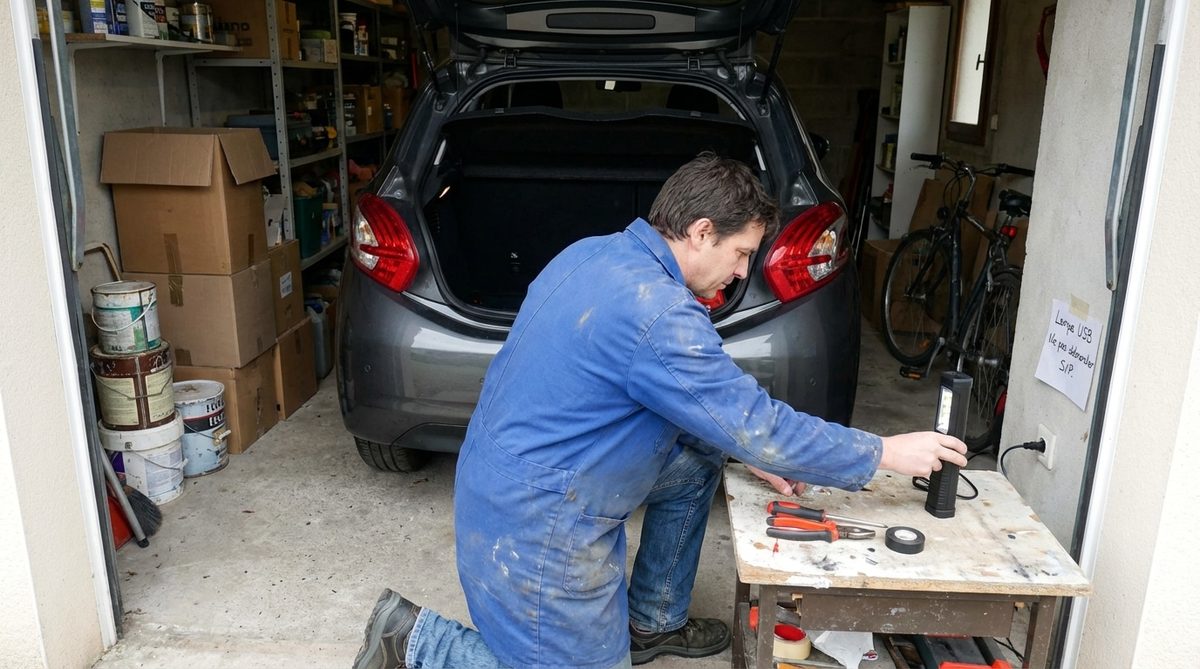
- The Garage : When the overhead bulb burns out, or you are working under a car where shadows hide danger.
- The Trunk : Keep it in your car kit. Dead battery in winter? You need light to check the cables.
- Camping : Those cheap batteries die fast. A rechargeable unit saves cash over a season.
- Emergency Kits : Power outage? You need hands-free light to find your way to the breaker box.
Spring is coming. People start cleaning out sheds. They tackle small repairs. This is the moment a hands-free work lamp becomes indispensable. You need both hands to hold the wrench, not the light.
Why This Specific Light Matters
It is not about luxury. It is about utility.
When you are repairing something, you cannot see what you are doing if you are squinting in the dark. A focused LED beam cuts through the gloom. It highlights cracks, rust, and loose connections.
The fact that it charges via USB is the real selling point. You don’t need a special charger. Use a power bank. Use your phone charger. Use the one from your laptop. It all works.
Is it perfect? Probably not. It is a basic tool for a basic price. But when you need light, cheap and ready, it does the job.
“A rechargeable USB work light is the most practical tool for DIY projects when overhead lighting fails.”
Think about your last failed project. Did you struggle to see? Did you drop a screw you never found?
This light costs less than a dinner for two. It fits in a drawer. It charges when you charge your phone.
The
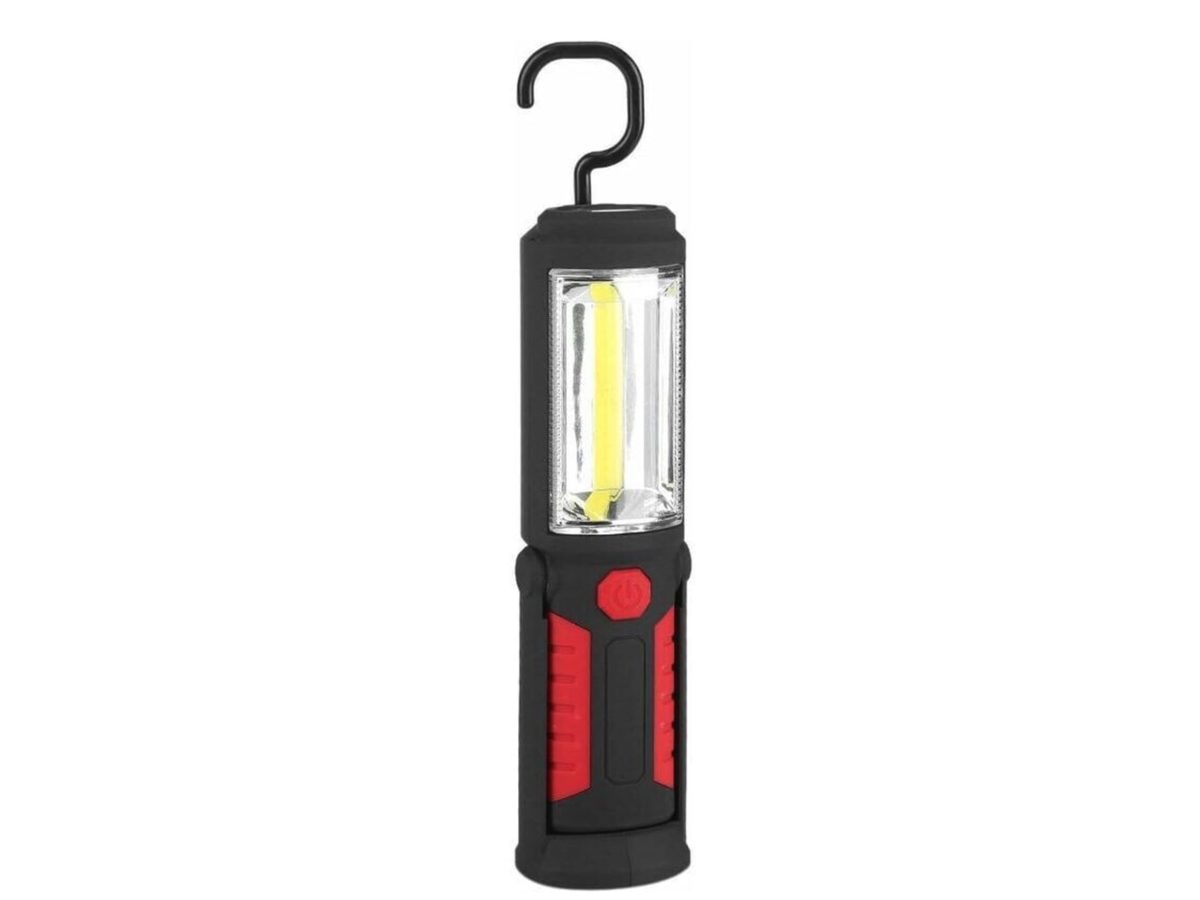
Stop buying decorative lamps. You need precision. This light targets exactly where you’re working. Under the hood. Beneath an IKEA shelf. Deep inside a rusted toolbox.
When you’re twisting a bolt in the dark, you don’t have time to contort your body. This tool fixes that. It’s not just for show. It’s for getting the job done.
Solving the poor lighting problem in tight spaces
Homeowners often ignore lighting until it’s too late. You’re in the crawlspace. The power is out. The attic is dusty. A standard overhead bulb fails here. You need directional light.
This unit promises high-luminosity LEDs. The key word is non-glaring. If you’re soldering or reading fine print on a fuse box, harsh glare ruins visibility. Comfortable, focused light lets you see details up close. That’s the main value proposition.
Magnetic base and 360-degree hook
The selling point is the dual-mount system. First, the magnetic base. Stick it to any ferrous surface. Your car frame. The side of a filing cabinet. Now your hands are free.
It also features 180-degree rotation. You can tilt the beam. Direct it precisely at the crack in the drywall or the loose wire in the junction box.
Then there’s the pivot hook. It rotates 360 degrees. Hang it from a shelf edge. Loop it over a pipe. Use it in a corner where a magnet won’t work. This flexibility turns a static tool into a dynamic one. It saves you minutes of frustration per job.
The confusing power source: USB or AA batteries?
Here is where you need to pay attention. The product listing is contradictory. Some descriptions claim it’s USB-rechargeable. Others state it uses three AA batteries (not included).
Do not assume. Check the box.
When it arrives, verify the power type. Look for a USB port. If it’s missing, you’re stuck with disposable batteries. Test the button. Check the two brightness speeds. Ensure the connectivity works. This prevents buyer’s remorse.
The size is compact. 21.5 by 5.7 centimeters. It fits in your glove box. It slides into a tool chest. It doesn’t take up much space.
Third-party seller risks and return policies
This item is not sold by the retailer directly. It ships from a third party. The primary seller shown is often listed as “Essentiels de Maison.”
Shipping is free but slow. Expect about ten business days. Not exactly instant gratification.
The rating is currently one star. One review. It mentions a defective lamp. The seller didn’t respond. Don’t panic over a single data point. But do be cautious.
Upon delivery, test it immediately. Keep the packaging. If it fails, use the return portal. Message the seller. Document everything.
Best placement for maximum utility
Where do you actually use this?
Keep it in the trunk of your car. Store it near your workshop tools. Place it by the front door for blackouts. Or toss it into your main tool box.
You value these gadgets when you need them instantly. Not when you’re standing in the dark looking for a replacement bulb.
Is it worth the price?
The cost is around 13 euros. That’s aggressive pricing. For that price, you get:
- Magnetic mounting
- Rotating hook
- Compact form factor
- Potential USB charging (verify upon receipt)
The trade-offs are clear. You might get AA batteries instead of USB. You wait ten days for shipping. You risk a defective unit from a third-party seller.
But if you fix things yourself, the utility outweighs the risk.
The real question isn’t whether the light is perfect. It’s where it will save you most. In the garage? In the car? In the dark attic?
Pick one spot. Keep it charged or stocked with batteries. And hope you never need it. Or hope you do, and it works when you flip the switch.
Your call.