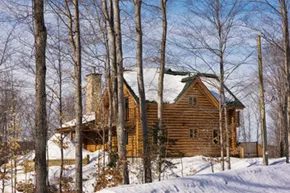
You see those icicles hanging off the eaves? They look festive. They look like a winter postcard. They are also a receipt for money you wasted.
Icicles form when heat escapes through your roof. The warmth melts the snow on top. That water drips down. It hits the cold gutters. It freezes. Repeat until your wallet is empty.
If your house is leaking heat, you have two choices. You can live in a cold house. Or you can crank up the thermostat. Most people choose the latter. They pay more. The icicles stay.
Insulation is supposed to stop this. It keeps warm air in during winter. It keeps hot air out in summer. It also reduces humidity issues in warmer climates. If your insulation is working, your roof shouldn’t be dripping frozen water onto the driveway.
But it isn’t always working. Maybe the insulation is too thin. Maybe it was installed poorly. Maybe it’s thirty years old and settled into a useless lump. If you are seeing icicles, your thermal barrier has failed.
Enter Icynene.
This spray foam insulation has been on the market since 1986. It’s made by a Canadian company. It’s marketed as a greener alternative to traditional fiberglass or cellulose. It seals gaps better. It’s more expensive upfront. Is it worth the cost?
We’re going to break it down. We’ll look at how it works. We’ll compare it to other materials. We’ll see if it stops the icicles.
Insulation Basics
Before you buy anything, you need to understand what insulation actually does. It doesn’t generate heat. It resists heat flow.
Heat always moves from hot to cold. In winter, your warm indoor air wants to escape to the cold outdoors. Insulation slows this down. The material traps air in tiny pockets. Still air is a poor conductor of heat. That’s the basic physics.
Most homes use batts or rolls of fiberglass. You stuff them between studs. It’s cheap. It’s easy to buy at any hardware store. But it has weaknesses.
Fiberglass doesn’t seal air leaks. It only slows conductive heat transfer. Air can still move through the batts. It can move around the edges. Gaps are fatal to insulation performance. If air leaks in, your R-value (resistance to heat flow) drops to near zero.
Spray foams like Icynene work differently. They expand. They fill cracks. They seal the building envelope. This stops both conduction and convection. No air movement means better efficiency.
But not all spray foams are the same. There are two main types: closed-cell and open-cell. Icynene is famous for its open-cell foam. It’s lighter. It’s more flexible. It’s also more permeable to moisture vapor.
Understanding this difference matters. It affects how your house breathes. It affects whether you need a vapor barrier. It affects the cost.
Let’s look closer at Icynene specifically.
We are about to look closely at Icynene, but first, we need to talk about the baseline. Everyone knows insulation is supposed to stop air from sneaking between your living room and the driveway. But how do you actually prove one product works better than another?
The industry standard is the R-value.
This number tells you how well a material resists heat flow. Higher R-value means better insulation. It is not just about thickness. It is about density, composition, and how those properties interact. A thick block of foam is useless if warm air blows right through it like it was never there.
You can compare R-values per inch. That is the only fair way to look at it, even though you will usually install several inches. Take fiberglass batting, the old standby. It offers an R-value of 3.14 to 4.3 per inch. Blown cellulose, another popular choice, sits between 3.13 and 3.7 per inch.
Notice I said initial value.
That number is theoretical. Real-world performance drops. Poor installation kills efficiency. Settling over time creates gaps. The paper value is a starting point, not a promise.
Which R-Value Does Your Home Need?
There is no single magic number. The right level depends on your specific situation. Before you buy Icynene or any other spray foam, ask yourself these questions. The answers dictate your budget and your comfort.
What is your climate?
If you live where winter temperatures regularly drop below freezing, you need serious resistance. A home in a mild, sunny zone where it rarely snows can get by with less. The colder it gets, the higher the R-value you need to keep the heat in.
What is your building layout?
A single-story ranch house has different needs than a two-story colonial. Do you have a crawlspace? A full basement? Cathedral ceilings that soar twenty feet high? Each of these areas loses heat differently. A finished attic needs more insulation than an unheated garage space. The geometry of your home changes the math.
What is your HVAC system?
Are you running gas furnaces or electric resistance heat? Do you have central air conditioning, or do you rely on open windows and fans? If your heating system is inefficient, no amount of insulation will fix the bill. You need to know how well your current system works before you upgrade the walls.
How high are your energy bills?
Check your historical costs. Are you already paying a premium to heat your home? High bills suggest you are losing money through the envelope. If your bills are low, you might not need to over-insulate.
Are you building new or retrofitting?
New construction allows for perfect sealing. Retrofitting old homes is messy. You have to deal with existing wiring, plumbing, and irregular studs. The process is harder. The results are less predictable.
What are local material costs?
Prices vary by region. Ask for quotes on fiberglass, cellulose, and spray foam in your zip code. The national average does not apply to your street.
Keep these variables in mind. They determine whether Icynene makes sense for your project. Next, we break down the basics of Icynene itself.
Icynene Basics
Icynene is a water-blown, low-density spray foam insulation. It expands to fill gaps, cracks, and cavities. It creates an air seal as it hardens. This is different from batts, which only resist heat flow but allow air to move.
The company markets it as eco-friendly. It uses water as the blowing agent, not harsh chemicals. This means lower global warming potential. It also means the foam is

The Chemistry Behind the Spray
You are looking at a material that starts as a liquid and ends as a structural seal. Icynene is produced by Icynene Inc. in Mississauga, Ontario, and it works by filling building cavities while bonding directly to the surrounding structure. This bond is what stops air from moving between your indoors and outdoors.
The application process is distinct. Installers spray a thin layer that looks exactly like whipped cream. It cures fast. Within moments, that soft, airy pile becomes a solid, flexible sponge. The company’s own safety sheets compare the cured texture to angel food cake. That’s a useful mental image if you need one.
Water is the key reactant here. When it meets the Icynene components, it creates carbon dioxide gas. That gas expands the mixture into foam. It is an open-cell foam. This means the bubbles created during expansion break open, trapping air inside the material as it hardens. Because the cells are open, Icynene is less dense than traditional closed-cell foams. In closed-cell versions, the bubbles stay intact, trapping the gas within a rigid plastic shell. Icynene lets the air stay in place instead.
Green Options and Product Variants
Icynene Inc. isn’t selling just one product. They have four distinct options, each serving a different need.
- Icynene LD-C-50 : This is the original. It is sprayed or poured. Like many foam insulations, it relies on petroleum-based components.
- Icynene LD-R-50 : This is the newest spray. It replaces some petroleum with castor oil. Yes, the same oil you might find in your pantry. The castor plant grows quickly and doesn’t need watering or pesticides. This makes it the most environmentally conscious choice. You can only buy this version in the United States.
- Icynene MD-R-200 : Another spray option. It’s also greener. One of its two components contains 12.6 percent recycled plastic.
- Gold Seal 400 : This isn’t a foam itself. It’s a delivery system. It allows you to dispense the foam easily into small, oddly shaped, or hard-to-reach areas.
The Cost of Doing It Right
You have choices. Lots of them. And Icynene isn’t the only insulation on the market.
The upfront cost is the first hurdle. Icynene is expensive. According to the Charleston Post and Courier, it costs 50 to 60 percent more than traditional fiberglass insulation. It is also slightly more costly than other blown-in foams.
Is it worth it? That depends on your goals. The material offers advantages that make it viable for many contractors and homeowners, particularly those looking for an Icynene insulation installation that prioritizes air sealing over mere R-value. We will get to those benefits shortly.
How Icynene Installation Works
Now that we know what the stuff is, let’s look at how it gets into your walls.
The installation requires specialized equipment. You can’t just buy a can at the hardware store and spray it yourself. The two components are stored in separate tanks and heated to specific temperatures before mixing. The installer uses a spray gun that mixes the chemicals on the tip of the wand.
Safety is paramount. Installers must wear respirators, goggles, and protective suits. The chemicals can irritate the lungs and skin before they cure. Once sprayed, the foam expands rapidly. It fills every crack, crevice, and gap. It adheres to wood, metal, and concrete.
The expansion is significant. It can fill voids that other insulations miss. This is where the air sealing benefit comes in.

You Can’t Install Icynene Yourself
Let’s get the big misconception out of the way immediately: Icynene insulation is not a DIY project. You cannot buy a can of it and apply it yourself. The manufacturer restricts installation strictly to authorized dealers who hold a specific license. Getting that license isn’t just a formality. Prospective installers must undergo rigorous training that covers everything from chemical handling to general building science and equipment operation.
Why the strict gatekeeping? Because the application process is unforgiving. The components are mixed on-site using specialized, expensive spray equipment worth around $50,000. One wrong move with the ratios, and you’re looking at wasted material or a failed install. Safety is equally non-negotiable. Installers must wear full-face respirators providing clean air to block any inhalation of foam particulates. But that’s not even the half of it.
The stuff is sticky. Icynene’s cohesive and adhesive properties mean it bonds to itself and almost anything else it touches. This is great for the long-term integrity of your insulation—it won’t settle or lose its grip on the studs over decades. But during installation? It’s a hazard. Overspray can ruin doors, fog up windows, and coat water heaters. Professionals have to mask off every unintended surface with meticulous care. If you try this at home, you’ll likely end up with a very expensive, very sticky mess.
Which Icynene Product Fits Your Project?
Once you’ve hired a pro, they’ll select from four specific Icynene products based on your home’s needs. The choice depends on whether you are building new or retrofitting an old one.
For new construction, the standard spray application is the go-to. It’s sprayed between walls, ceilings, and floors—where insulation traditionally lives. The reaction is instant. The foam expands a hundred-fold in seconds. Whether you choose the original formula or one of the newer “greener” versions, the thermal resistance is consistent: R-value of 3.6 to 3.7 per inch. This is comparable to cellulose insulation made from recycled paper.
If you are dealing with an existing structure, the game changes. You can’t easily spray into finished walls without tearing them down. Instead, installers can pour Icynene into hollow cavities. This method requires no structural alteration to the building, though small holes may need to be drilled in walls or ceilings to inject the foam. The poured foam expands more slowly, reaching 60 times its starting volume within minutes. Installers typically pour twice to ensure a complete, void-free fill. The resulting R-value is roughly 4 per inch, matching the performance of fiberglass batting.
For those small, specific leaks around windows, doors, or repair patches, there is a specialized kit. It’s a rapid-response system. The expansion rate mirrors the sprayed foam, and it delivers an R-value of 3.7 per inch. It’s fast, precise, and designed for minor but critical gaps.
Why Insulate with Icynene? The Pros
You’re likely wondering why you’d pay a premium for a product that requires a certified pro to install. The advantages are tangible, particularly for homeowners focused on efficiency and comfort.
Environmental Impact
Foam insulation has a messy history. Older foams used chlorofluorocarbons (CFCs) that depleted the ozone layer. Later versions used hydrochlorofluorocarbons (HCFCs), which are better but still harmful. Icynene uses water as the foaming agent. No ozone-depleting chemicals. Furthermore, it’s a low-density foam. Because it expands so significantly, you use less petroleum-based material to fill the same space compared to high-density polyurethanes. Two of their product lines also substitute renewable or recycled materials for some petroleum ingredients. It’s a greener option in a category that hasn’t always been kind to the planet.
Air Seal Integrity
Because Icynene swells and flows into every nook and cranny, it creates what builders call a tight envelope. It doesn’t just insulate; it seals. Air leakage from indoors to outdoors is significantly reduced. This tightness is often the biggest factor in energy bills, sometimes more so than the R-value itself.
No R-Value Loss Over Time
Fiberglass batting can compress. Over years of settling, it loses thickness and effectiveness. Icynene remains supple. It flexes as the building shifts and settles without compressing. The insulation stays where it is, doing what it’s supposed to do, for the life of the structure.
Application Flexibility
Most foam insulations require warm, dry conditions to cure properly. Icynene doesn’t care. It can be installed in less-than-ideal weather. For builders, this means fewer delays. If a rainstorm hits, you don’t have to stop work. This can keep a construction schedule on track.
Noise Reduction
The same property that makes it a great air sealer also makes it a great sound barrier. By filling the cavities between walls and floors, it dampens ambient noise. If you live near a busy street or have noisy neighbors, this is a silent benefit.
Air Quality and Odor
Some foams off-gas for months. Icynene doesn’t. Any smell associated with the installation process dissipates within a few days. There is no residual odor. You can move back in quickly without worrying about chemical smells lingering in your air.
Energy Star Certification
New and existing homes insulated with Icynene have frequently received Energy Star certification. This is a signal from the EPA and Department of Energy that the home meets high standards for energy efficiency. It’s a stamp of approval that can matter when you sell your house.
The Financial Incentive
There is another reason to consider this now: tax credits. For homeowners in the United States, federal tax credits were available for 2009 and 2010 for energy-efficient improvements. This included insulation, new doors and windows, water heaters, and roofing. You could deduct 30 percent of the cost, up to a maximum of $1,500. Icynene qualified. It wasn’t just a comfort upgrade; it was a financial one, depending on when you did the work.
But money and environment aside, nothing is perfect. Every material has a downside. Before you sign that contract, you need to understand the cons.
The Hidden Costs of Icynene Installation
Nothing is truly perfect. Not ice cream. Not puppies. And definitely not Icynene.
Before you commit to spraying open-cell foam in your attic, you need to know what actually goes wrong. It’s not about the product failing; it’s about the reality of application.
Landfill Waste
Icynene expands fast. It’s applied in thin layers that bloom quickly to fill gaps. But if you overfill, the excess oozes out. You have to saw it off. Now you have surplus foam. Can you toss it into other empty cavities? Sure, if you have them. But often, that sawed-off excess ends up in a landfill. It’s a small environmental hit for a perfect seal.
The Ventilation Trap
This foam seals a house tight. Too tight? Sometimes. It stops heat transfer effectively, but it also stops air movement. You need fresh air inside. You just want to control when and how it gets there. An Icynene-insulated home often requires artificial ventilation systems. In winter, bringing in outside air means heating that cold draft. If you skip proper venting, you lose the efficiency gains. You’re essentially paying for insulation while losing heat through uncontrolled air exchange.
Chemical Odors
This isn’t the foam’s fault, strictly speaking. It’s about the installer. Icynene requires certified training. If someone cuts corners or mixes chemicals poorly, you’ll smell it. A lingering chemical scent. It’s rare, but it happens. And it’s not something you can just air out easily once it’s cured in your walls.
Moisture and Condensation
Icynene is a great air barrier. But it’s not a moisture barrier. Water vapor from inside your house can pass through the foam and hit the cold underside of your roof. Condensation forms. Dampness builds. Over years, that damages your structure. That’s why pros recommend a vapor diffusion retarder. These are paint-on coatings or physical barriers like plastic, aluminum, or steel sheets. They block water vapor. Essential in colder climates. Without them, you’re inviting rot.
So, Icynene has pros and cons. What now?
You compare.
Choosing the Right Insulation for Your Home
Insulation costs vary wildly. Insulating an attic runs $0.50 to $2.25 per square foot ($5.38 to $24.22 per square meter). Insulating an entire home? Expect $2,500 to $5,500 on average.
Your budget isn’t the only variable. Consider your home’s structure. The area you’re targeting. Environmental concerns. Allergies. Availability in your region. Once you define those parameters, the choice becomes clearer. Icynene isn’t the only game in town.
Here is how the alternatives stack up.
Cellulose
Made from recycled paper and flame retardants. It’s blown into cavities. Great for existing homes because it fills irregular nooks easily. But it settles. Over time, you can lose up to 20% of its initial R-value (3.13 to 3.7). You might need to top it off in a few years.
Closed-Cell Polyurethane Foam
Petroleum-based. Sprayed on. It uses hydrofluorocarbons during prep. It plugs spaces tightly, creating a strong thermal envelope. R-value is higher at 6.25. It may drop slightly in the first few years, but it’s denser and more rigid than Icynene. Good for moisture resistance too.
Cotton Batting
R-value of 3.0 to 3.7. It’s green. Renewable resource. But don’t be fooled—petroleum is used to grow and transport the cotton. It’s softer to install, but less common in new builds.
Fiberglass Batting
R-value 3.14 to 4.3. Comes in rolls. DIY-friendly if you’re careful. Pros lay it down. It struggles in irregular spaces. Fibers escape. Short-term respiratory or skin irritation is real. Loose-fill fiberglass is blown in by pros. Made from recycled glass. R-value 2.2 to 4.3. Settles slightly. Not as precise as foam.
Mineral Wool
Rock wool or slag wool. Loose-fill. About 75% recycled industrial material. R-value 3.1 to 4.0. Fire resistant. Doesn’t settle much. Heavier to handle than fiberglass.
Rigid Polyurethane Foam Boards
R-value 5.6 to 7.0. Durable. Holds up over time. Mostly for new construction or exterior sheathing. Not for blown-in applications. Harder to cut and fit in tight retrofits.
Weighing Your Options
You now have the breakdown. Icynene’s strengths. Its weaknesses. The alternatives.
Which one fits your home?
If you want a DIY project, fiberglass or cellulose might be your route. If you want maximum R-value per inch and air sealing, closed-cell foam or Icynene wins. If you’re worried about chemicals, look at cotton or mineral wool.
Think through the data. Pick the plan. Or go put on another wool sweater. Maybe two.
Real-World Impact: Military Tents
Forget your suburban attic for a moment. Think about military tents in Iraq and Afghanistan. Temperatures are extreme. Air conditioning costs are astronomical. The Army approved foam insulation for tents in 2007.
The initial cost was steep. $30,000 to $70,000 per tent. Total expenditure? Roughly $95 million.
But the return on investment was fast. Estimates suggest the insulation saves at least $105 million per year in energy costs. It blocks heat transfer. Wind. Dust. It’s not just about comfort. It’s about survival and efficiency. In Afghanistan, initial costs were $29 million with proportional savings.
Insulation works. But it needs to be the right type. Applied correctly. Managed for moisture.
That’s the reality of home renovation. It’s not magic. It’s physics. And chemistry. And money.
Pick carefully.