It’s a mess.
Houses. Mobile homes. Condos. Co-ops. Townhouses. The list of property types stretches on like a bad grocery receipt. You think you’re just buying a place to live, but suddenly you’re wading into a swamp of legal definitions, hidden fees, and structural quirks that vary wildly depending on what side of the fence you pick.
The real estate market isn’t complex because of math. It’s complex because every building type has its own rulebook, its own set of liabilities, and its own way of screwing you over if you aren’t paying attention.
Most buyers just want a key and a door. They don’t want to understand the difference between a co-op board vote and an HOA fee structure. But here’s the thing: ignorance costs money. And time.
Let’s look at the actual issues involved. Not the glossy brochure stuff. The real stuff.
Why property type dictates your renovation freedom
You can’t renovate a co-op the same way you renovate a detached house. Period.
In a single-family home, you’re king. Want to knock down a wall? Call an inspector, maybe get a permit, and go. In a condominium or co-op, you’re asking permission. The board has veto power. They care about noise, aesthetics, and whether your contractor has insurance that meets their specific, often outdated, requirements.
Mobile homes bring a different headache. The land might not be yours. You might be renting the slab your house sits on. That changes the entire value proposition. It changes your ability to extend, upgrade, or even repair the foundation.
The hidden costs of shared walls and shared rules
Townhouses and condos promise lower maintenance. No lawn. No roof leaks to fix yourself.
But you’re trading autonomy for predictability. And predictability comes with a monthly bill that rarely stays predictable. Special assessments happen. Elevators break. Paint fades.
If you’re doing DIY work in these spaces, you’re navigating a minefield of building codes that apply to the whole structure, not just your unit. One wrong move with plumbing or electrical can violate the master deed.
The biggest mistake homeowners make is assuming “my home, my rules.” In multi-unit living, that assumption is expensive.
Where to start before you sign anything
Check the bylaws. Read the minutes from the last six board meetings. Look for patterns of complaints about noise, leaks, or budget shortfalls.
For detached homes, the issue shifts to isolation. You are solely responsible for everything. The sewer line. The tree falling on the garage. The aging HVAC system.
The market is complex because the risk profile changes completely based on the structure. Know what you’re buying. Not just the square footage. The governance. The liability. The freedom.
Or the lack of it.

How commercial property value gets calculated
Forget the comps. When you are looking at a commercial building, the price tag doesn’t come from what the house next door sold for. It comes from the cash flow.
Take the General Motors building in New York City. Its value isn’t really about the steel and glass or the view of the skyline. It is about the rent checks. Specifically, the rental income generated by the businesses occupying the space. That revenue stream is the engine. If the tenants pay, the value holds. If they leave, the valuation tanks.
This is a stark contrast to the residential market, especially looking back. Before the housing bust in 2007, house-flipping and REITs were lucrative investments. People got rich quick. They bought, renovated, flipped. Or they bought shares in real estate investment trusts and watched the numbers climb. It felt safe. It felt easy.
Then the bubble burst.
The 2007 crash changed the rules. It showed everyone that speculation without underlying fundamentals is a dangerous game. Commercial property valuation leans hard into those fundamentals. Income. Expense ratios. Capitalization rates. It is less about the hype and more about the math.
So, if you are thinking about commercial real estate, stop looking at the facade. Start looking at the lease agreements. That is where the actual value lives.
Why Foreclosure Rates Are Spiking Again
The numbers don’t lie. Foreclosure filings are up across the US. After years of relative stability, the housing market is showing its teeth again. This isn’t a hypothetical scenario. It’s happening in neighborhoods right now.
Why is this happening? It comes down to the debt trap of rising rates. Many homeowners locked in mortgages during the pandemic era. They got rock-bottom interest rates. Now, those rates are gone. Instead, they are facing higher payments on adjustable-rate loans or refinancing shocks. When income stays flat but housing costs jump, people miss payments. Miss enough payments, and the bank takes the house.
It’s a brutal cycle. You make your payment. The bank files a notice. You scramble. Then another notice.
How to Spot the Warning Signs Early
Most foreclosures aren’t sudden events. They are slow burns. You can see them coming if you know what to look for.
Pay attention to these signals:
– Late fees appearing on statements. If you’re paying late consistently, you’re sliding toward default.
– Notice of Default (NOD). This is the legal first step. It gets recorded in public records. Once this hits, the clock starts ticking.
– Property condition decline. A house that hasn’t been maintained in six months might be in distress. Overgrown lawns, piled-up mail, or boarded windows are visual cues.
Don’t wait for the sheriff to show up. Check your local county recorder’s office. Search for “notice of default” in your zip code. It’s free. It tells you exactly who is in trouble.
Protecting Your Home From Foreclosure
If you own a home, you have some leverage. If you’re just watching the market, you have options too. But knowledge is the only real shield.
For homeowners at risk:
1. Talk to your lender immediately. Do not ignore letters. Lenders often prefer modification over foreclosure because foreclosure is expensive for them too.
2. Look for government programs. HAMP and similar initiatives have evolved. There are still loss mitigation options.
3. Sell short if necessary. If the loan balance is higher than the home value, a short sale might stop the foreclosure. It hurts your credit, but not as much as a foreclosure.
For investors or those looking to buy:
– Buy the NOD. Once a Notice of Default is filed, the property becomes a distressed asset. These can be purchased at a discount, often through auction or direct negotiation with the struggling owner.
– Know the redemption period. In some states, even after foreclosure, the owner has a right to redeem the property. This complicates buying foreclosures. Research local laws.
Foreclosures are ugly. They destroy equity and community stability. But they also create opportunities for those prepared. The key is speed. Information moves fast. The market moves faster. Stay sharp. Check the records. Talk to people. Don’t assume the trend is permanent. It might not be. But right now, the risk is real.
Fixed vs Adjustable Rate Mortgages
The interest rate type matters. It changes your monthly payment. It changes what you can actually afford.
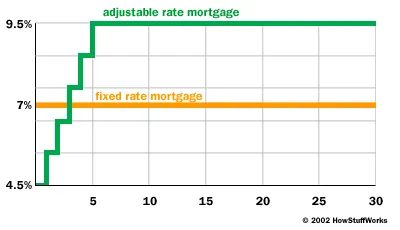
Fixed-rate mortgages stay the same. The rate is locked. Your principal and interest payment never shifts for the life of the loan. Predictable. Boring, maybe. But safe.
Adjustable-rate mortgages (ARMs) move. They start lower. That initial teaser rate looks great on paper. Then it resets. After six months, a year, maybe three. The rate ties to an index. If the index goes up, your payment goes up. Sometimes a lot.
Why does this affect the price of your home?
Because lenders use your expected payment to determine pre-approval. A lower initial ARM payment might let you qualify for a more expensive house. You buy bigger. You think you’re winning. Then the rate adjusts. Your payment spikes. You’re underwater on cash flow.
Don’t do that unless you plan to sell before the adjustment. Or unless you have a fat emergency fund ready to absorb the jump.
Most buyers stick to fixed. They sleep better. You know what you’ll pay in 20 years.
Budgeting for a mortgage isn’t just about the principal and interest. It’s the whole pie.
How to Budget for a Mortgage
Add these line items to your spreadsheet.
- Property taxes. These change. Assessments rise. Don’t assume they stay flat.
- Homeowners insurance. Includes liability and property damage. Flood and wind might be separate. Check your area.
- Private Mortgage Insurance (PMI). If you put less than 20% down, you pay this. It’s expensive. It disappears once you hit 20% equity.
- HOA fees. If you’re in a condo or community, these are mandatory. They cover trash, landscaping, amenities. They also rise.
Use a full PITI calculator. Principal, Interest, Taxes, Insurance. That’s your real monthly cost.
Subtract that from your take-home pay. What’s left for food? Gas? Life?
The 28% rule suggests housing costs shouldn’t exceed 28% of gross income. The 36% rule says total debt shouldn’t exceed 36%. These are guidelines, not laws. But they’re there for a reason.
If you’re stretching to 40%, you’re one job loss away from panic.
Look at your current spending. Track it for a month. Be honest. Then add the mortgage payment. If it hurts now, it will hurt more when you move in and buy furniture.
Shop around. Three lenders. Minimum. Compare fees, not just rates. Closing costs vary. Points vary. One lender might offer a lower rate but charge $2,000 more in fees. Run the numbers. Break-even point matters.
You’re signing a 30-year contract. Choose wisely.
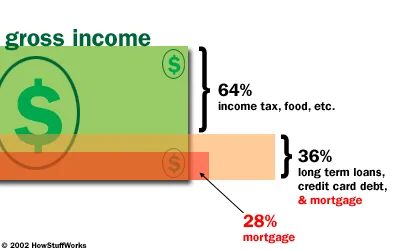
The 30% Mortgage Rule and Why It’s Broken
Keep your mortgage payment under 30% of your take-home income. That’s the golden rule. The one everyone quotes at dinner parties. The one that sounds sensible until you look at actual rent or mortgage rates in most US cities.
Reality check.
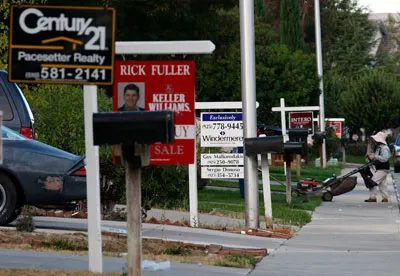
Most families can’t hit that number. They’re stretched thin. They’re paying more. And when the budget breaks, the consequences aren’t abstract. They’re visible. Look at the next picture. It shows what happens when the math doesn’t work.
You’re house poor. Or worse.
“Unfortunately, many families are unable to maintain this type of budget, leading to the outcome shown in the next picture.”
It’s not just about saving money. It’s about survival. If 30% feels impossible, you need to adjust. Buy less house. Live somewhere cheaper. Or find a way to bring in more cash. There’s no magic trick. Just hard choices.
Why does this matter now? Because housing costs keep climbing. Wages aren’t keeping pace. And the safety net is gone.
You see the next image. It’s harsh. But it’s true.
Why so many homeowners are fighting back against predatory lending
You scroll through Zillow. The listings look familiar. Too many of them. It’s not just a bad market cycle. It’s the hangover from a time when lenders didn’t give a damn if you could actually pay the mortgage. They sold you more house than you could afford. Predatory loans. NINJA mortgages. The kind of deals that sound great until the teaser rate expires and the bill comes due.
But here is the twist. The narrative isn’t just about foreclosures anymore. It’s about pushback. Homeowners are organizing. They are finding loopholes, legal leverage, and community support. They are refusing to just pack up and leave.
How to navigate loan modification and legal defense
So you’re stuck with a loan that’s underwater. What do you actually do? You don’t just sit there. You get aggressive with the paperwork.
First, look into HAMP (Home Affordable Modification Program) successors or state-specific equivalents. Many banks still have programs to modify loans because foreclosure is expensive for them too. It costs money to take back a house, clean it up, and sell it at a loss. You can use that against them.
“Foreclosure is the lender’s last resort, not the first option.”
Gather your documents. Pay stubs. Hardship letters. Proof of income. If you lost your job, that counts. If you had a medical emergency, that counts. Be specific. Don’t say “I’m struggling.” Say “My income dropped 40% and my medical bills are $2,000 a month.”
If the lender denies you, check the loan documents. Did they follow every single regulatory step? Predatory lenders often mess up the paperwork. They skip disclosures. They fail to record liens correctly. Hire a HUD-approved housing counselor. They are free. They know the rules. They can spot errors in the chain of title that a lawyer might miss because they are too busy billing by the hour.
Which resources help homeowners avoid foreclosure
You need a village. Or at least a hotline.
- HUD-approved housing counseling agencies : Find one near you. They provide free or low-cost advice on foreclosure prevention.
- Local legal aid societies : If you can’t afford a private attorney, these groups often take on housing cases.
- State attorney general’s office : File a complaint if you suspect predatory lending practices. It creates a paper trail.
- Neighborhood associations : Sometimes collective action works. If a whole block is facing issues, the bank might negotiate harder.
Don’t ghost the bank. Communication is key, even if it feels like talking to a wall. Send everything certified mail. Keep copies. If they sue, you need proof you tried to work it out.
Why ignoring the problem makes it worse
Silence is not golden. It’s expensive. Ignoring letters from your lender gives them the legal right to move faster on foreclosure. They don’t have to wait for you to respond. They just have to prove you missed payments.
Engage. Ask for a loan modification. Ask for a short sale approval if you can’t stay in the home. Ask for a deed in lieu of possession. These are exits, not defeats. They protect your credit score better than a foreclosure judgment

who controls mortgage interest rates and why lenders get away with it
You look at that photo from October 2007. Marcus West and Larry Heard standing in front of a Countrywide Home Loans center. It’s not just a picture of a protest. It’s a snapshot of the moment the facade cracked. ACORN, the nonprofit group leading the charge, wasn’t guessing. They had receipts. They accused Countrywide of predatory lending practices.
That accusation stuck. It changed everything.
But the real question isn’t just about what went wrong at Countrywide. It’s about who actually pulls the strings on your mortgage rate. You might think it’s the bank. It’s not.
The Federal Reserve sets short-term rates. The bond market sets long-term rates.
That’s the distinction most homeowners miss.
The Fed tweaks the federal funds rate. That affects your credit card APR. Your line of credit. Maybe your adjustable-rate mortgage if it’s tied to short-term indices. But that 30-year fixed rate you’re obsessing over? The Fed doesn’t touch that directly.
Wall Street does.
Investors buy mortgage-backed securities. They demand a certain yield. That yield becomes your interest rate. When investors get nervous, they demand more. Rates go up. When they’re calm, rates drop. It’s a market. Not a charity.
This disconnect is why the ACORN protest mattered. It exposed how lenders used complex products to exploit borrowers who didn’t understand this machinery. They sold loans that looked cheap but carried hidden traps.
If you’re doing DIY renovations and financing them, you need to watch the bond market. Not just the Fed announcements.
Check the 10-year Treasury yield. That’s your compass. When it spikes, your mortgage options tighten. When it dips, there’s a window.
Don’t let a lender tell you rates are “set.” They’re not. They’re negotiated. They’re influenced. They’re volatile.
Know the difference between who sets the price and who collects the fee. The Fed sets the environment. Lenders set the margin. You pay both.

Why Ben Bernanke’s Rate Decisions Force Housing Compromises
You might think the Fed Chairman just sits in a high-rise watching graphs. Wrong. Ben Bernanke, as the head of the Federal Reserve Board, holds the lever that sets the prime rate. That rate ripples down to your home mortgage. It’s not abstract economics. It’s your monthly payment.
When the housing market tanks—and it was in a deep slump during that era—borrowers don’t just find better deals. They get squeezed. Low rates help, sure. But when inventory is scarce and prices are stubborn, you can’t just pick any house. You have to pick a house.
The Reality of Mortgage Rates in a Slump
Here’s the trap. Even with Bernanke adjusting rates to stimulate buying, the supply side doesn’t bounce back overnight. Sellers are holding out. Buyers are desperate. The result? Compromise.
You’re not looking for the perfect kitchen. You’re looking for a roof that doesn’t leak and a payment you can afford. Maybe that means skipping the garage. Maybe it means taking a house that needs a full reno. Maybe it means moving to a neighborhood you didn’t plan for.
What Homebuyers Actually Sacrifice
Let’s look at the trade-offs. When prime rates shift, affordability changes. But if the market is tight, affordability doesn’t equal choice. It equals survival.
- Location: You move further out. Commute times go up. Gas bills spike.
- Condition: You buy a fixer-upper. Cash reserves vanish into drywall and plumbing.
- Size: The three-bedroom becomes a two-bedroom. Kids share rooms. Toys get fewer shelves.
“Many homebuyers are having to make compromises,” isn’t a headline. It’s a daily reality.
How to Navigate the Trade-Offs
If you’re in this spot, stop dreaming about the ideal home. Start calculating.
- Check the true cost. Not just the mortgage. Property taxes. Insurance. Repairs.
- Walk away from the ‘must-haves.’ Granite counters? Nice to have. Solid foundation? Non-negotiable.
- Talk to your lender. Know your exact rate. Know how much a 0.25% shift costs you over 30 years.
Bernanke sets the rate. The market sets the price. You set the compromise.
There’s no silver bullet. Just math. And a lot of duct tape.

Why smaller floor plans are the new normal for budget-conscious buyers
Budgets don’t lie. They scream.
Most people walk into open houses dreaming of sprawling estates. Then they look at the interest rate. Or the down payment. Or just the sheer cost of living in their city. The dream shrinks. Fast.
So they buy smaller. Not because they want to, but because they have to. It’s a math problem, not a lifestyle choice.
You end up with less square footage. Less closet space. Maybe one bathroom instead of two. But you also end up with a manageable mortgage. That’s the trade-off. You lose space to buy freedom from debt.
It forces you to be picky. Every square foot has to earn its keep. You can’t afford wasted hallways or awkward nooks. You need efficiency.
Does it suck? Sometimes.
But look at the alternative. Being house poor. Staring at a beautiful, empty void that drains your bank account every month. Small homes demand creativity. Big homes demand cash.
Pick your poison.