The smell of a freshly scrubbed bathroom or the sight of a gleaming countertop triggers a specific kind of relief. It feels like control. It feels like health. But here’s the hard truth: that shine can be a lie.
As winter sets in and we spend more hours indoors, cleaning becomes a central part of our daily survival. We vacuum, we wipe, we spray. We want that cocoon feeling to be real, not just aesthetic. Yet, many of our most habitual cleaning moves are actually working against us. They create the illusion of cleanliness while subtly sabotaging long-term hygiene.
Moving dust around instead of capturing it. Drowning surfaces in chemicals. Skipping the rinse. Cleaning the floor before the furniture. These aren’t just minor inconveniences. They are small, sneaky errors that turn good intentions into quiet disasters. Spotting them—and fixing them—can transform your home from merely “looking good” to actually being healthy and comfortable. Especially now, when the days are short and the air is dry.
Stop Dry-Clustering Furniture: The Dust Migration Problem
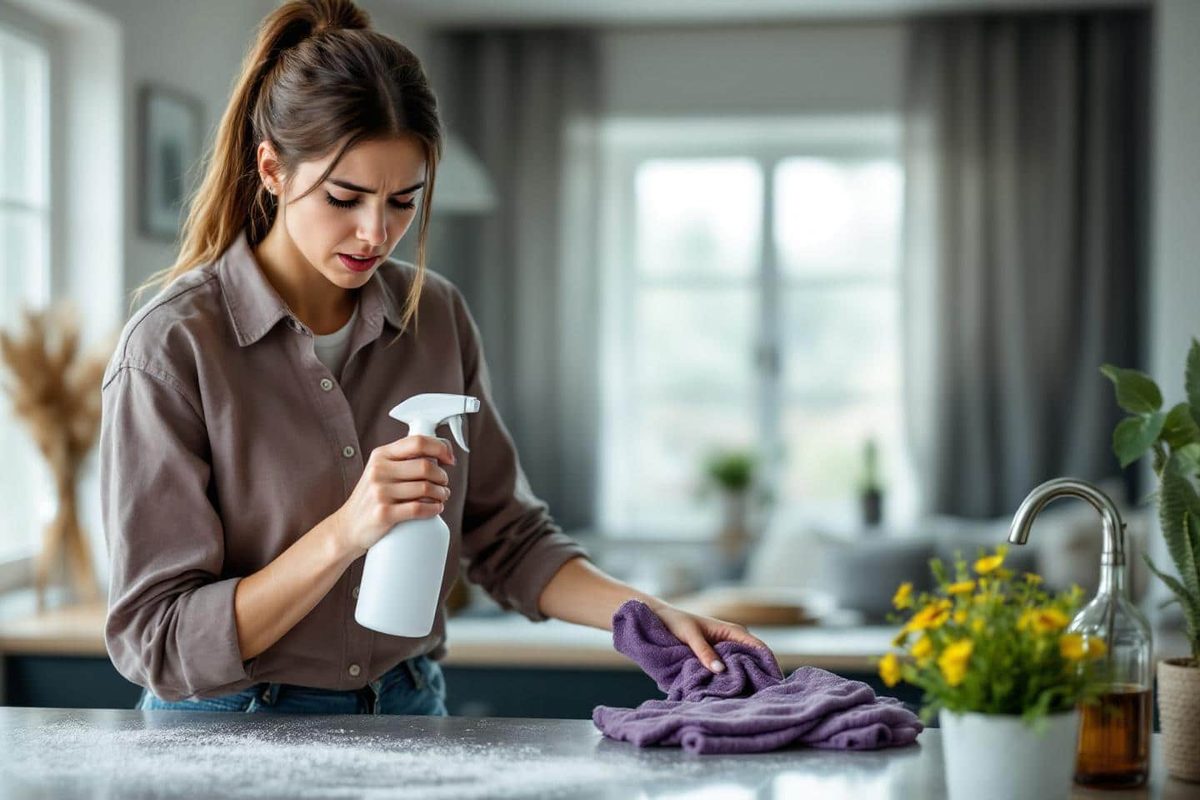
Using a dry cloth on your dresser, shelves, or table seems like the most efficient way to dust. It’s fast. It requires no water. But it has a critical flaw.
A dry cloth often pushes dust from one surface to another rather than eliminating it.
When you swipe that dry rag across a bookshelf, you aren’t removing the particulate matter. You’re just relocating it. The result is an invisible cycle where dust clouds redeposit elsewhere in the room minutes after you’ve finished.
This is particularly problematic in winter. With heating systems running, air circulation increases. That displaced dust doesn’t just settle; it floats. It stays airborne longer, degrading the air quality you’re trying to improve.
The Fix: Switch to microfiber cloths that are slightly damp. Microfiber traps particles electrostatically and physically. If you dampen it with water or a mild cleaner, it holds the dust until you wash the cloth. And you must wash those cloths regularly. A dirty microfiber cloth is just a dirty rag with extra steps.
Stop Drowning Surfaces in Cleaner: The Sticky Trap
We’ve all been there. You see a stain. You see a smudge. Your instinct says: more product equals more power.
This is a pragmatic-looking habit with a perverse effect. Pouring excess detergent or all-purpose cleaner onto a surface doesn’t clean better. It leaves a residue.
That surplus of chemicals dries into a sticky film. And sticky things attract more dirt. They hold onto dust, grease, and grime far longer than a properly dosed surface would. Instead of making cleaning easier next time, you’ve made it harder. You increase the risk of streaks, spots, and even bacterial growth in that moist, sugary residue.
The Fix: Precision beats volume. Use the amount of cleaner recommended by the manufacturer. Usually, a few sprays or a diluted mix is enough. You want the surface to be clean, not coated in chemical glue.
Stop Scrubbing Without Rinsing: The Residue Buildup
Speed is the enemy of thoroughness. When we’re cleaning “express,” we often skip the rinse. We scrub the counter. We mop the floor. We walk away.
This is a trap.
Leaving cleaning products on surfaces allows them to dry into a dulling film. On countertops, it can cause slight discoloration. On tile grout, it can cause a whitish haze or a sticky feel. Over time, these residues accumulate. They dull the finish of your materials and accelerate wear. You aren’t just cleaning dirt; you’re adding a layer of chemical sediment.
The Fix: Rinse, even if it’s quick. Use a clean microfiber cloth with plain water to wipe down surfaces after applying cleaner. Dry them with a separate towel if necessary. A quick rinse takes ten seconds. The long-term dulling takes years to reverse.
Stop Cleaning Floors Before Furniture: The Gravity Error
There is a natural, almost magnetic urge to start with the floor. It feels like the foundation. It feels like the right place to begin.
But this order is backwards.
If you sweep or vacuum the floor first, you are preparing a clean slate. Then, you proceed to dust shelves, wipe lamps, and clean tables. Gravity does its job. Dust and debris dislodged from those higher surfaces fall onto your freshly cleaned floor.
You have just wasted your time. You are now re-cleaning a surface you already attended to. This is especially noticeable in winter, when open windows and radiators create drafts that circulate dust constantly. If you clean the floor first, the air is already stirring the very debris you’re trying to remove.
The Fix: Top to bottom. Always.
- Dust high shelves and furniture first.
- Wipe down tables and counters.
- Finally, sweep or vacuum the floor.
This ensures that the last thing you touch is the floor, capturing everything that has fallen from above. It’s the only logical sequence for a truly clean home.
Start there. Ditch the dry cloth. Measure your cleaner. Rinse your work. And change the order. Your lungs, and your floors, will thank you. The rest of the journey—how to handle windows, kitchens, and bathrooms without losing your mind—comes next.
Why Your Microfiber Cloth is Spreading Germs
You’re wiping down the counter. It feels thorough. You’re confident. But you’re likely just moving dirt from one place to another. This is the hidden trap of standard cleaning routines. It’s not about effort. It’s about technique.
Consider the sponge or mop. We treat them like extensions of our hands. Reliable. Consistent. But after weeks of use, that porous yellow sponge is a bacterial incubator. Your flat mop head? It’s a dirt diffuser.
“Reusing the same cloth or mop week after week redistributes germs and causes persistent odors, especially in closed houses during winter.”
Stop using the same tool for every surface. It’s inefficient and unhygienic.
The Dust Trap and Sticky Residue
Most homeowners miss the basics because they focus on the product, not the motion.
First, never use a dry cloth on furniture. Dry dusting doesn’t capture particles. It launches them into the air. They settle back down within minutes. You haven’t cleaned. You’ve just aerosolized the grime. Use a damp microfiber cloth instead. It traps the dust mechanically.
Second, stop drowning surfaces in spray. Too much cleaner leaves a sticky film. That film acts like glue for future dirt. You’ll be cleaning again in three days instead of three weeks. Spray the cloth, not the surface. Wipe with moderate pressure. No residue. Just clean.
Third, rinse. Always rinse. Soap scum accumulates on glass, tile, and wood. It dulls finishes. It attracts more soil. If you don’t rinse off the detergent, you’re sealing the dirt in.
The Order Matters
Clean in the right direction. Top to bottom. Outside to inside.
Many people start with the floor. Big mistake. Dust falls from shelves. From cabinets. From the air. If you mop first, you’re washing your hard work. Clean the high surfaces first. Then the counters. Then the appliances. Finally, the floor.
This prevents cross-contamination. You’re not dragging kitchen grease into the bedroom. You’re not spreading bathroom mold into the living room. Use color-coded cloths if you have to. Blue for glass. Red for toilet. Green for kitchen. It forces discipline.
Changing Your Habits
Switch your sponges weekly. Or boil them daily. There’s no excuse for a stinky sponge. It’s cheap. It’s effective.
Alt
ernate your mops. Don’t use the same wet mop for the kitchen sink and the bathroom tile. You’re asking for bacterial growth. You’re asking for odors.
“Replacing sponges regularly and disinfecting them with boiling water prevents them from becoming breeding grounds for bacteria.”
Winter is coming. The windows stay shut. The air stagnates. Indoor air quality drops. Your cleaning routine can either contribute to the problem or solve it.
Stop multiplying your efforts. Start multiplying your efficiency.
A truly clean home isn’t about scrubbing harder. It’s about scrubbing smarter. Use the right tool. Use the right order. Rinse the residue.
The satisfaction of a clean house shouldn’t require a full workout. It should come from simple, repeatable actions. Do it right once. Do it again next week. The results compound. The odors