When November hits and the days shrink, the outdoor line becomes a relic of summer. For many households in France, bringing the washing machine indoors is no longer a choice. It’s the only option. But here is the problem. You are essentially acting as a humidifier. Every load of laundry you hang inside pumps liters of moisture back into the air you breathe.
It feels innocent enough. You pull damp sheets from the drum. You spread them out. Life goes on. But that water has to go somewhere. If it doesn’t evaporate correctly, it settles. It sits in the corners. It hides behind furniture. And suddenly your “cozy” living room is a breeding ground for mold.
Why indoor drying ruins air quality
The science is simple but often ignored. Wet clothes release water vapor. A single load can add up to several liters of moisture to your indoor environment. In the winter, when windows stay shut and heaters run constantly, that moisture has nowhere to escape. The air becomes stagnant. Thick. Heavy.
This isn’t just about comfort. It is about health.
- Acariens (Dust mites) thrive in this damp chaos.
- Mold spores find perfect purchase on cold walls.
- Bad odors linger because fabrics stay humid too long.
Thick items like winter coats and bedding are the worst offenders. They hold water like sponges. When you hang them in a bedroom, you are saturating the air overnight. The result? Morning headaches. Chronic coughs. That persistent feeling of being cold, even in a warm room. It’s the “damp cold” that seeps into your bones.
The habits making your house a swamp
You might think you are being careful. You aren’t. Most of us make the same mistakes repeatedly. Here is how you are likely sabotaging your home’s health right now.
1. Drying in the bedroom
This is the most common error. The bedroom is where you spend eight hours a night. You breathe deeply. You absorb everything in the air. Hanging wet towels or sheets in this space means you are sleeping in a humid environment all week. The skin and lungs take the hit. Move the drying rack to a bathroom or utility room instead. Better yet, use a dehumidifier if you must dry in the main living area.
2. Overloading the rack
Space is air. Air is drying. If you hang clothes so tightly that they touch, the water gets trapped between the fabrics. It doesn’t evaporate. It just moves to the neighboring item. You end up with a chain reaction of dampness.
Tool tip: Use a drying rack with good vertical space. Don’t just lay items flat unless you have a dedicated drying cabinet. Airflow needs to move around every garment, not just the top layer.
3. Ignoring the “damp smell”
If your room smells like wet dog or old basement, you have already lost. That smell is mildew. It means the air humidity has exceeded the fabric’s ability to release water into the atmosphere. The relative humidity in that room is likely over 60%. This is the danger zone for mold growth on wall paint and window frames.
4. Not ventilating during/
Why Indoor Drying Is Quietly Ruining Your Walls
Autumn brings out bad habits in laundry routines. You hang wet clothes, thinking you are saving money on the dryer. But that simple act can turn your living room into a humidity trap. The clothes horse gets shoved against a cold wall. It ends up in a hallway with dead air circulation. You overload the rack. Pulls, towels, and sheets pile up in a dense stack. You think this saves time. It does not. It suffocates the fabric. Indoor drying without proper ventilation significantly extends drying time and breeds mold.
The signs are screaming at you. Fogged windows. A stale, musty smell that won’t leave. Walls that feel damp to the touch. You might see flower-shaped mold spores behind the wardrobe. Paint starts to bubble near the window frames. Ignoring these warnings lets moisture levels rise. Water gets trapped in your structure. Your home loses its ability to breathe naturally.
How to Dry Clothes Without Damaging Your Home’s Air Quality
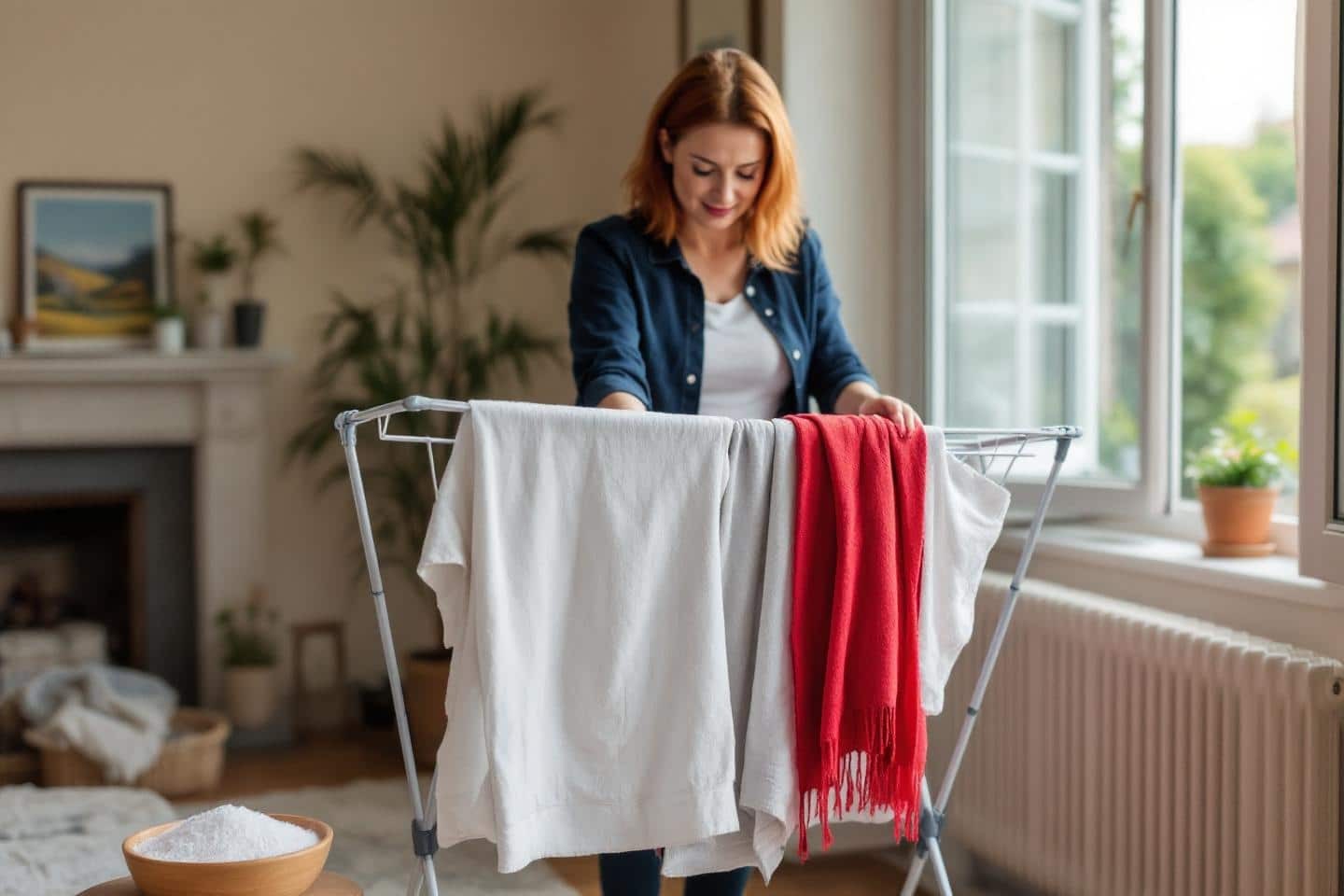
Stop treating your bedroom like a utility room. The key is isolation and airflow. Hang wet laundry in a well-ventilated room. Ideally, keep it away from bedrooms. Never press the drying rack against a cold or poorly insulated wall. The air needs space. Leave gaps between garments. This allows heat and air to move through the fabric. It speeds up the process. It kills the smell. It stops fungi from taking root.
Open a window. Just ten minutes a day. Even in the dead of winter. This flushes out the saturated air. It replaces it with fresh, drier air. If you have a VMC (ventilation system), turn it on during heavy laundry days. It does the work for you.
Want a pro tip? Hang a few empty hangers on the rack. They act as spacers. They break up the density of the wet clothes. Move the rack around the room periodically. Don’t let it sit in one spot where moisture pools.
Natural, Cheap Fixes for Persistent Indoor Moisture
You do not need expensive gadgets to solve this. Salt is your best friend. Keep a large bowl of coarse sea salt near the drying area. The salt absorbs excess moisture from the air. It acts as a natural buffer. You will see less condensation on your windows. You will see less dampness on your walls. When the salt turns into a solid cake or starts to liquefy, dump it and replace it. Keep the supply fresh.
Timing matters too. Dry clothes when the outside air is driest. Usually, that is midday. Avoid running the dryer and taking a hot shower at the same time in the same room. That is a recipe for disaster. If your layout allows, place the rack in a cross-ventilated room. One facing a sunlit bay window works wonders. Sunlight helps. Airflow helps.
For chronic cases, an electric dehumidifier works. But for an eco-friendly approach, salt and ventilation are unbeatable.
“Salt absorbs moisture from the air, acting as a natural buffer against condensation and damp walls.”
The Routine That Saves Your Home
Winter does not have to mean a soggy, mold-prone house. Proper drying preserves your clothes. It preserves your walls. It preserves your health.
Stick to the basics. Use a ventilated room. Keep the rack away from cold walls. Crack a window for ten minutes daily. Use coarse salt if the air gets heavy. This routine is as important as putting on a coat when it drops below zero.
It is a small shift. But the difference between a fresh, dry home and a damp, unhealthy one comes down to where you hang that last wet shirt. What will you change today?