Coffee grounds. We toss them out every morning, dreaming of that next caffeine hit. But before you sweep them into the bin, pause. That dark, wet sludge is often touted as a gardening miracle. It’s abundant. It’s free. And if you actually know what you’re doing, it can be useful.
But here is the problem. Most people use it wrong.
They dump it on plants, expecting instant growth, and end up with root rot or acidic soil that kills everything in its path. You need to stop treating it like a magic wand and start treating it like a tool. It has to be applied correctly, or it hurts your garden instead of helping it.
Here is how you actually use coffee grounds in the garden without ruining your plants.
The Soil Acidity Myth
Let’s clear up the biggest misconception first. There is a persistent belief that coffee grounds are highly acidic and will shock your plants. The reality is more nuanced.
Fresh coffee grounds are mildly acidic, with a pH hovering around 6.5. But once they brew and sit for a while, they neutralize rapidly. By the time they are “used,” their pH is nearly neutral, sitting between 6.8 and 7.0.
“Coffee grounds are not as acidic as people think. They are closer to neutral once brewed.”
So, can you put them on acid-loving plants like blueberries or rhododendrons? Yes. Will they drastically lower the pH of your soil? No. Not on their own. If you are worried about soil pH, do a test first. Don’t guess.
How to Add Coffee Grounds to Compost
This is the safest and most effective way to use them. Coffee grounds are a “green” material in composting terms. They are rich in nitrogen, carbon, and potassium.
When you add them to your compost bin, you are feeding the microbes. They break down the grounds quickly, releasing nutrients back into the soil. But there is a catch.
Do not make your compost pile entirely of coffee grounds. If you dump too many at once, the pile can become compacted. It turns into a slimy, anaerobic mess that smells bad and heats up unevenly. You need to mix them in.
- Mix grounds with “brown” materials like dried leaves, straw, or shredded paper.
- Aim for a ratio of about 1 part coffee grounds to 3 parts browns.
- Turn the pile regularly to keep oxygen flowing.
This balances the carbon-to-nitrogen ratio and prevents the slimy texture.
Using Grounds as a Natural Fertilizer
You can use coffee grounds as a slow-release fertilizer. They contain nitrogen, which promotes leafy growth, as well as phosphorus, potassium, and trace minerals.
But here is where DIY gardeners often mess up.
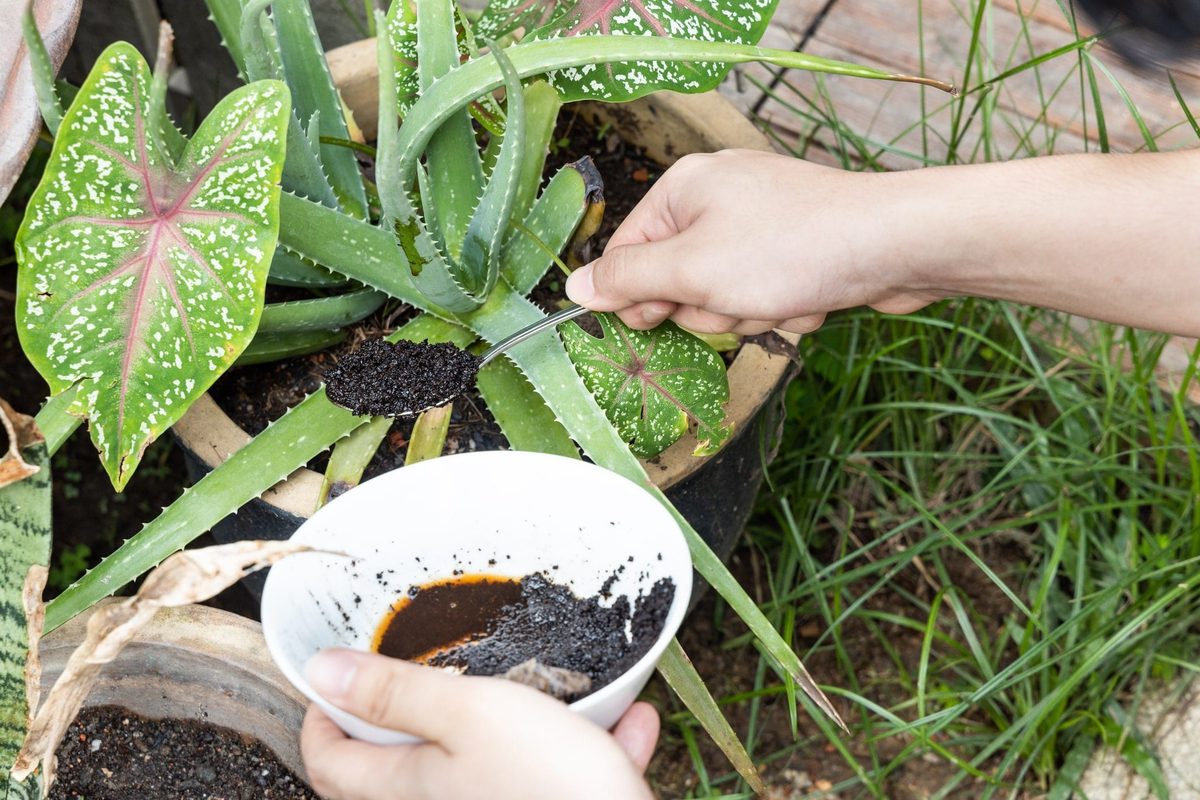
Do not pour fresh, wet grounds directly onto the surface of the soil around your plants. When they dry out, they form a hard, water-repellent crust. Water slides right off it instead of soaking in. The roots underneath stay dry. The plant suffers.
If you want to use them as a top dressing, mix them into the top few inches of soil. Break up that crust. Or better yet, let them
The truth about coffee grounds and soil pH
There is a persistent myth that coffee grounds are an acidifying bomb for your garden. That’s not true. Although brewed coffee is acidic, the brewing process removes much of this acidity. What remains is almost neutral. The pH value of used coffee grounds is 6.5-6.8. This means that using them will not harm the pH of your soil. You can spread them without worrying about the soil becoming too acidic.
For plants that prefer slightly acidic conditions – such as azaleas, hydrangeas or blueberries – they can still be beneficial. But not because they turn the soil into vinegar. Rather, it’s the organic matter they add when mixed with soil or compost.
Composting vs. direct application
Professional gardeners usually recommend composting. Mixing grounds with other organic matter helps it break down properly. This prevents them from dumping them directly on the soil.
When you spread a thick layer of wet grounds around flowers or in pots, you create a physical barrier. Water cannot penetrate. Air cannot circulate. The result is suffocation of the roots. Mold appears quickly. The grounds harden into a crust that suffocates the roots below.
Composting solves this problem. It breaks the structure. It releases nutrients slowly. It keeps the ecosystem healthy.
Natural pest control agent
Grounds have a trick up its sleeve. They repel certain pests. Slugs and snails hate the abrasive texture. Ants avoid scent and the grit. A thin ring of dry grounds around sensitive plants can keep them at bay.
But don’t overdo it. Too much organic material causes other problems. Scale insects and other parasites love the moist, rich environment that excess grounds can create. Moderation is key.
Which plants love coffee grounds?
Not all plants benefit in the same way. Some thrive with added nitrogen. Others don’t care about it or may even suffer from it.
Plants that feed heavily thrive best. Tomatoes. Squash. Roses. These plants gobble up nitrogen. Regular applications of grounds – either with compost or as a thin top dressing – promotes their growth. The results are often noticeable.
Integrating Grounds into Your Compost
Treat coffee grounds as “green” material. They are rich in nitrogen. To balance your compost, mix them with “brown” materials. Dead leaves. Straw. Cardboard.
The goal is one part green and two parts brown. This prevents the pile from becoming too acidic or smelling bad. A balanced compost pile decomposes efficiently. It produces rich, dark humus that benefits all the plants in your garden.
An unexpected use for coffee grounds
In addition to fertilization, grounds have a creative use.
- As a cat repellent: Do the neighbor’s cats use your garden as a litter box? Mix grounds with citrus peels. The smell repels them naturally.
- Seed boosting: Add a small amount to the seedling soil. Nitrogen stimulates early root development.
- Earthworm Food: Worms love grounds. Incorporating them into the soil promotes the activity of worms. This improves soil structure and aeration.
Avoid common mistakes
Even a good tool can cause damage if used incorrectly.
- Overuse: More is not better. Excess grounds compact the soil. They attract pests. They disturb the balance of the compost.
- Using them alone: Grounds aren’t a complete fertilizer. They must be part of a broader strategy. Mix them with other organic additives.
- Skip aeration: If you apply soil directly, keep the layer thin. Break it up. Make sure water and air get to the roots.
Coffee grounds are a valuable ally in the garden. But only if you understand how they work. Use them wisely. Add them to your compost. Find out which plants benefit from it. The rest is just trial and error.