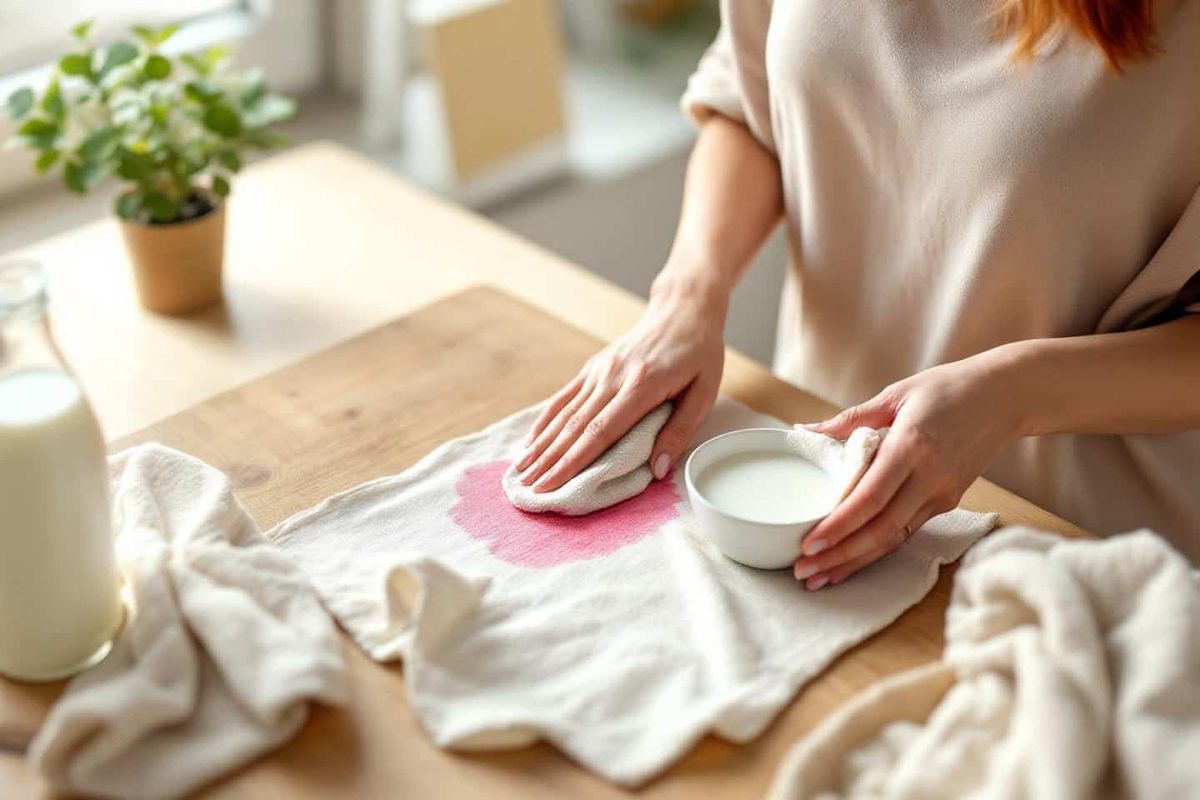
You know the feeling. You reach for a pen or bite into a juicy raspberry and suddenly you see it. A dark blue stain or a bright red stain that spreads across your favorite shirt. Panic spreads. It’s early fall, the red fruit season is coming to an end and these accidents seem to be increasing in our homes.
The instinct is to grab the heavy-duty chemical stain removers. Spray, scrub and hope for the best. But there is a better way. An old trick that has been passed down from generation to generation. To do this, you need to open the refrigerator and look past the butter. You need milk.
Why milk beats chemical stain removers
Chemical cleaning agents are aggressive. They can damage fabric fibers and cause colors to fade over time. Milk is a different matter. It acts as a gentle, natural solvent for certain types of stains. The secret lies in its composition. Milk contains proteins and carbohydrates that interact with pigment molecules.
This method is especially useful right now. School supplies cause ink spills. Summer fruits leave berry stains. Milk offers an environmentally friendly alternative that is safe for your skin and the environment. It does not denature the textile. It preserves the original color of the garment.
The science behind stain removal
Why does ink or fruit juice stick so stubbornly? The pigments penetrate deep into the heart of the fabric fibers. Normal washing often does not remove them.
Milk works through a subtle chemical reaction. Milk proteins bind to molecules corresponding to the color. They basically pull the pigment out of the fabric. This is especially effective with water-based inks and anthocyanin-rich fruits. Think raspberries, blackberries and blackcurrants.
You don’t need to scrub hard. You don’t need corrosive substances. The milk does the work for you. It removes the stain without damaging the fabric.
Step-by-step instructions for removing stains with milk
Timing is everything. As soon as a stain appears, act quickly. Fresh stains react significantly better than old, set-in ones.
- Wipe, don’t rub. Use a clean cloth to absorb any excess ink or juice. Rubbing only pushes the pigment deeper.
- Apply cold milk. Pour cold milk (whole or partially skimmed) liberally on the dirty area. If the garment is small enough, you can submerge the entire garment in a bowl of milk.
- Soak. Let soak. Two hours is enough for smaller stains. If you want more stubborn areas, leave it on overnight. The milk gradually absorbs the pigments.
- Washing. Wash the garment with a normal machine wash. Use regular detergent. Avoid oversaturating the fiber with additional soap.
This method is suitable for cotton, synthetic fabrics and even wool. Just adjust the soaking time according to the fineness of the material.
Practical tips against stubborn stains
How do you deal with a stubborn ink stain or a splash of fruit compote? The process remains the same.
- Remove excess. Pat dry with a paper towel.
- Dip the stain. Cover completely with cold milk.
- Be patient. If the stain is old, the milk bath may need to be renewed. Repeat the procedure before washing again.
- Final wash. Clean the item as usual.
Repeated soaking in milk before the second wash can produce surprising results for the most stubborn stains. The fabric does not retain the smell of milk. It doesn’t stiffen.
A natural alternative to long-term care
Using milk to remove stains is more than a quick fix. It is a change in the way we take care of our clothes. Choosing a natural solution protects your health and the planet. It extends the life of your clothes. It reduces the amount of chemical waste in the home.
As the weather cools and we gather to eat, the risk of spills increases. White napkins and formal shirts are more likely to be a disaster. Keeping a milk bottle near the laundry area is a game changer. It turns a potential disaster into a manageable inconvenience.
This trick combines tradition with practicality. It saves money. It respects the textile. It is so simple that anyone can try it.
So the next time you see a red or blue stain, check the fridge. The savior of your clothes can hide behind butter.