The sweet scent of summer stone fruits, the cool shade of ripe branches – it’s easy to romanticize the orchard as a place of pure relaxation. But behind the quiet poetry of a pear branch or a budding apple tree lies a small, well-organized threat.
Aphids.
They adapt quickly and turn the harvest dream into a nightmare of wilted leaves and sticky mess.
Good news?
Three simple actions can flip the script on an entire season. It starts with prevention, careful observation and natural interventions.
Why aphids invade your garden
Before you grab the spray bottle or start shaking the branches, you need to understand the “why”. Aphids don’t just appear out of nowhere; They react to environmental stimuli. Knowing their habits is your best defense.
Conditions that favor the outbreak of aphids
In many temperate regions, infestations begin in the spring and are accompanied by mild temperatures, moderate humidity, and most importantly, tender new growth. If spring comes early, you may see the first colonies as early as April.
Your own gardening habits can make the situation worse. Heavy pruning stimulates fast, soft growth. Too much water does the same thing. These new leaves are full of sap, which aphids find irresistible. For them, it’s an all-you-can-eat buffet.
In addition, gardens too protected from the wind or isolated from the balance of nature often suffer more. Urban and suburban areas with dense plantings and hedges act as transport routes for these pests. They can move from one tree to another in a few days.
The Real Risk to your fruit trees
An aphid is not a crisis. But a colony? This is exponential. A single female founder can produce up to 80 larvae in just two weeks. The damage is fast. The leaves curl, turn yellow and become covered in a sticky substance called honeydew. This sticky residue attracts ants and promotes the formation of sooty mold, a black fungus that blocks sunlight and further stresses to the tree.
A heavily infested tree loses its vitality. Fruit production sometimes drops by half in summer, especially in young apple or plum trees. You know it: cherry tree in June, black with aphids, exhausted. It’s a sight every grower wants to avoid.
How to recognize the first signs
Aphid infestations are not always noticeable at first glance. You don’t need to see hundreds of bugs to know they’re there. Look for:
* Distorted or curled leaves.
* Ants marching up branches. They farm aphids for honeydew, so their presence is a major red flag.
* Shiny, sticky spots under the leaves or on the stems (honeydew itself).
Speed matters. Check the young shoots regularly, especially after hot and humid periods. Two or three quick checks a week from the end of spring can save you from a bigger infestation later. If you catch it early, the tree will recover easily. If you find it too late, you have to catch up.
Let nature do the hard work: attracting ladybugs
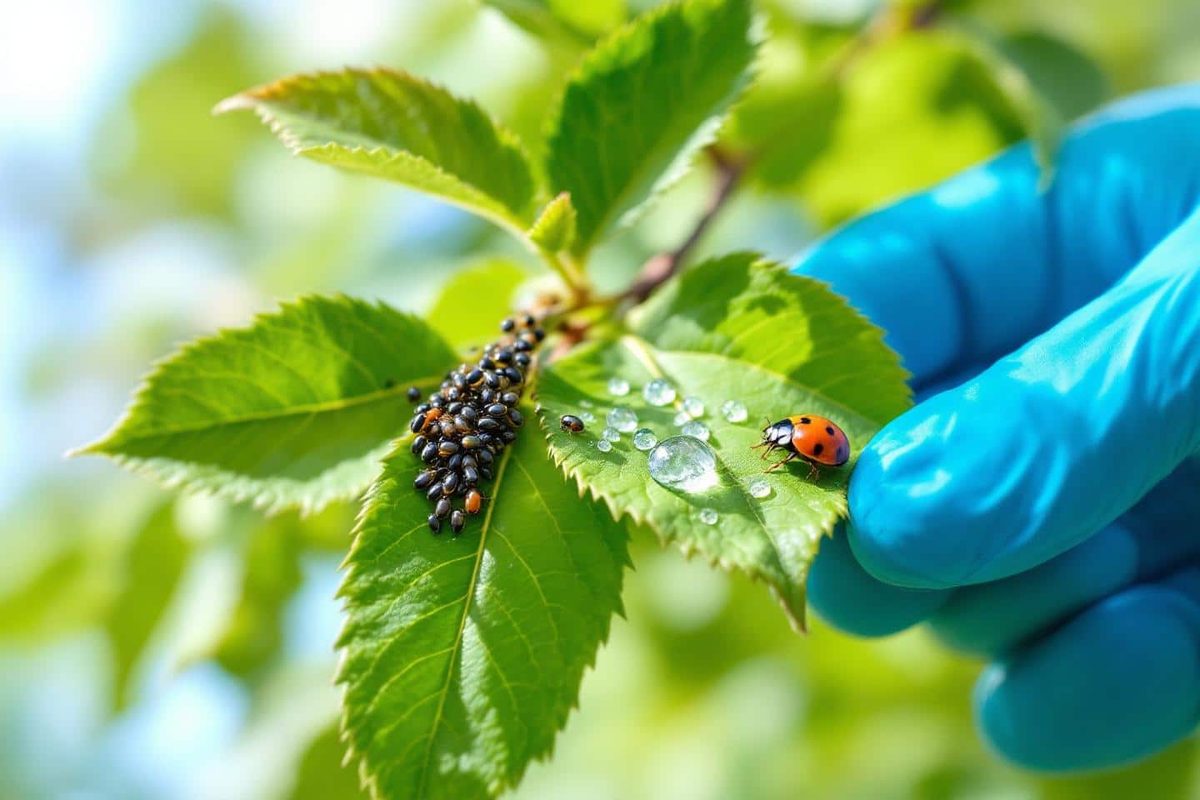
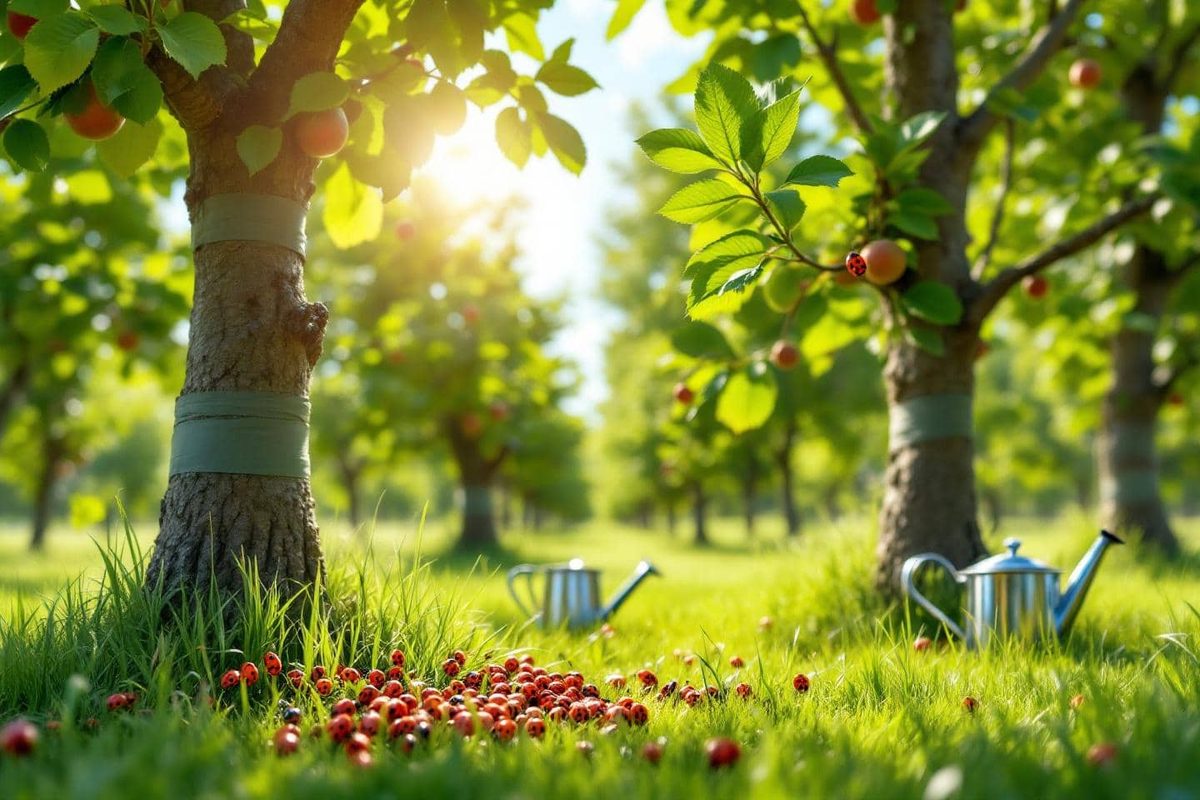
Chemical pesticides are a sledgehammer when you need a scalpel. The most effective and long-term strategy is to invite the natural predators of aphids into your orchard. Ladybugs are the undisputed champions of this battle. One ladybug larva can eat dozens of aphids every day. But you can’t just wait for them to appear. You need to make your garden an inviting home for them. This means planting specific nectar-rich flowers and avoiding broad-spectrum sprays that kill both the good guys and the bad guys. It’s about creating a balance where predators outnumber pests before the pests get the upper hand.
Build a habitat, don’t just buy bugs
Nature has already solved the aphid problem. You just need to make sure the right residents move in. Ladybugs are the heavy hitters here, but they won’t stick around if the neighborhood is hostile. You have to build the community first.
Planting companion flowers isn’t just about aesthetics. Fennel, dill, nasturtium, marigold, and tansy act as magnets for these predators. But nasturtiums have a darker trick up their sleeve. Planting a patch at the base of your fruit trees works as a trap crop. The aphids hit the nasturtiums first. They get busy there. The fruit trees stay safe while the bugs are distracted elsewhere.
You also need shelter. Insects need places to hide from wind and predators. You can buy fancy insect hotels, or you can just be lazy and effective. Pile up some hollow wood sticks. Stand some elderberry stems upright in the ground. Leave some leaf litter. These simple structures provide excellent nesting sites. A garden full of hiding spots and free of chemical sprays will attract natural enemies faster than any artificial method ever could.
Keep the soil alive and the grass long
How do you keep these allies from leaving? Simple. Stop mowing the lawn so short near the orchard. Leave some patches of tall grass. It gives the ladybug larvae a safe corridor to move between plants.
Mulching helps too. Use straw, hay, or chipped wood (BRF). This creates a humid, protected micro-environment on the ground. It’s decorative. It’s practical. It works.
In many French villages, growers plant those trap nasturtiums as early as May. They know the aphids will arrive soon. They are ready. The key is patience. Avoid chemical treatments whenever possible. Even a light spray can wipe out the beneficial insects you are trying to attract.
Don’t release bugs into a wasteland
Here is a common mistake that costs money and time. Buying a jar of ladybugs and dumping them in your garden. If the environment isn’t ready, they will just fly away. They look for food and shelter. If you haven’t provided either, they leave.
Prepare the environment with companion plants and hideouts, then release the ladybugs. This encourages them to root in your orchard.
Mass releases without preparation are counter-productive. It’s better to wait. Build the habitat first. Then introduce the predators. A stable population will protect your trees for years. Chemical sprays offer a quick fix but break the cycle. Natural balance is slower to start but lasts much longer.
Soap solution: The direct hit
When you see aphids clustering on young shoots, you need action. Not next week. Now. Black soap is the go-to remedy. It’s cheap. It’s effective. It doesn’t harm the tree.
The success of this treatment depends entirely on the mix. You need warm water. You need precision.
- 1 liter of warm water
- 1 tablespoon (10 to 15 g) of liquid black soap
- Optional: 1 teaspoon of baking soda for severe infestations
Mix it well. Use a clean sprayer dedicated to this job. Don’t use the one you use for herbicides. Some people add a bit of Marseille soap, but olive oil-based black soap is the gold standard. It penetrates the aphid’s outer shell better.
When to spray for maximum impact
Timing matters. Spray early in the morning or late in the evening. The leaves need to be cool. If you spray in the hot sun, the solution can burn the foliage. Also, check the forecast. If rain is coming, wait. You don’t want to wash your work away before it starts working.
Target the infestation spots. Focus on the undersides of the leaves. That’s where the colonies hide. Usually, one or two applications, spaced three days apart, are enough to break the cycle.
What not to do
More soap does not mean better results. A high concentration will scorch the young leaves. It weakens the plant. Stick to the ratio. It protects both the tree and the ecosystem.
Don’t spray the whole orchard if only one tree is affected. Preserve the beneficial insects on the healthy trees. You want diversity. You want balance.
The manual purge
Sometimes technology is overkill. If you spot a small colony forming, go in with your hands. Or a strong jet of water. Knock them off. Destroy them. It’s immediate. It’s free. Do it before the population explodes.
Catch the problem before it spreads
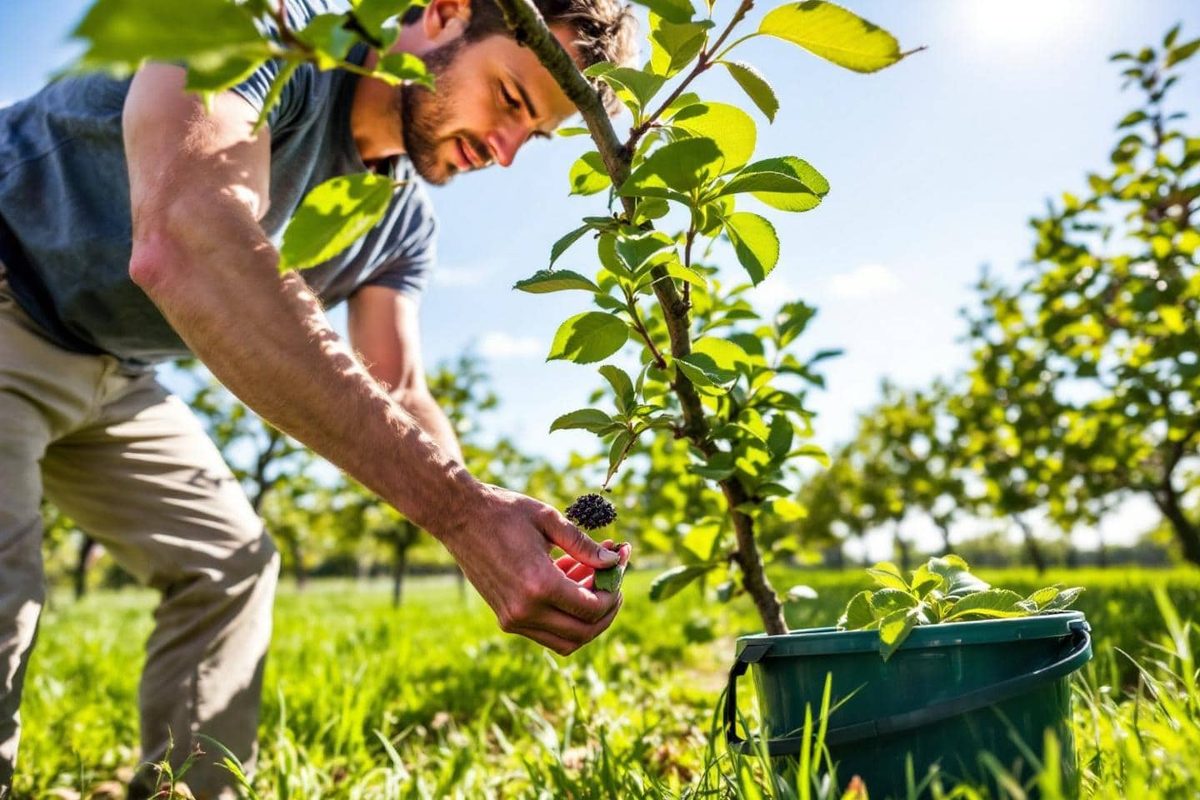
The simplest intervention is often the most effective. Regular manual inspections prevent the formation of aphid colonies and ensure that your orchard looks well maintained. It’s a return to the traditional roots of gardening.
See tips for new shoots. Check the undersides of young leaves. Examine the folds of the opening buds. Aphids hide there. They look like small black, green or pink dots. If you recognize them in time, everything changes.
Ants are a warning sign. If you notice unusual ant activity on branches, there is likely an aphid colony nearby. Ants farm them for honeydew. If you follow the ants, you will run straight into the problem. Catch it now. Prevent the invasion later.
Gentle removal techniques
The goal is to clear the pests without damaging the sensitive plant tissue. You want to preserve the vitality of the tree and not destroy its growth potential.
Start with a moderate spray of water from a garden hose. The pressure dislodges many early-stage colonies. It is non-invasive and surprisingly effective.
Use your fingers in the more difficult areas. Or an fingernail. A soft cloth also works. Gently wipe away the insects. This gesture has been passed down through the generations. It easily fits into your weekly gardening routine. It is also a quiet moment amidst the chaos of everyday life.
Consistency wins the war
Repeat the process. The more you check, the harder it is for aphids to settle in. Spend a few minutes once or twice a week. Do this in spring and early summer. It prevents major summer infestations before they occur.
When you adopt this habit, you develop a closer relationship with your garden. Harvesting pure fruit feels better when you know how it came to be. Consistency means less chemical treatments. That means more peace of mind. And that means baskets full of fruit to enjoy with the family.
Keeping the orchard healthy all summer: the reward for early action
The sheltered garden exudes vitality from day one. Yields increase. The overall health of the trees will be displayed. You prepare for the future with confidence.
Less chemicals, better taste
By attracting ladybugs, using black soap wisely on new growth, and manually removing the first signs of trouble, you will significantly reduce your reliance on chemicals. The fruits ripen naturally. It develops an authentic taste. The texture is superior.
Many gardeners report more consistent yields. Yields increase. Eating your own fruit tastes better when you know it’s clean. There is less guesswork. Less worry.
Maintaining balance for future seasons
Early action will help this year’s crop. But it also protects next year. Limiting the reproduction of aphids now prevents them from multiplying massively later. The orchard becomes stronger. Trees live longer. You pass on a healthier and more sustainable environment to the next generation.
This virtuous cycle begins today. It guarantees harmony in the garden. It creates pride when the harvest lands on the table. It promises juicy, sun-filled fruit.
Prepare these three steps during the first warm days of the year. Attract ladybugs. Spray diluted black soap on the new shoots. Remove the first aphid clusters by hand. Choose a method that respects the ecosystem. The joy of seeing a balanced ecosystem flourish is priceless. Maybe this year’s harvest reveals something more than just fruit. Perhaps it reveals the simple, enduring joy of interacting with nature every day.