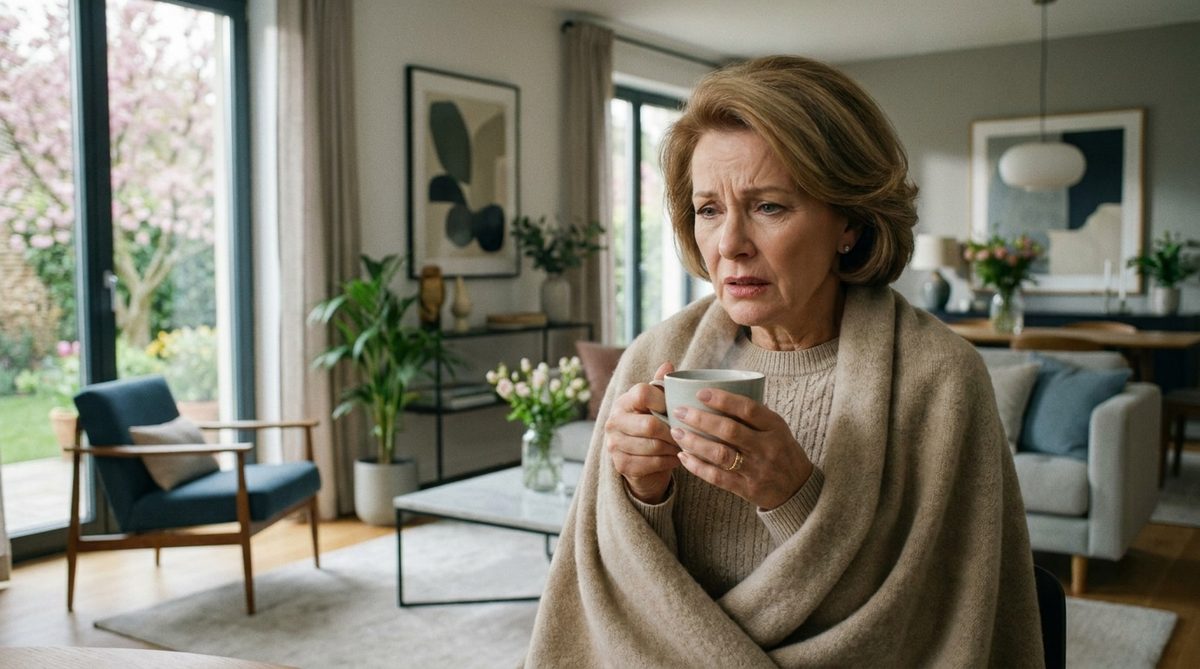
May days lie. They promise spring. The collective heating is then switched off. Thermometers ignore calendars. You are left in the living room at a temperature of around 16 °C. This is not a crisis. However, it’s enough to make your fingers go numb. You find yourself rigid on the couch. Moisture began to accumulate in the corners of the room. The instinct is to turn up the heat. Pay later. There is a better way.
Do not try to heat all the air. First, it traps heat where it matters most. Align your body. supplemental heat should only be used in small and precise doses. As a result, shivers are reduced. Your bill is under control.
Why your living room feels like a fridge at 16°C
Temperatures usually drop later. Afternoons can be mild. It’s getting cold at night. If the apartment does not get enough sunlight or loses heat quickly, the indoor air in the room feels bearable, but the walls do not. This is thermal inertia. Walls, floors and ceilings cool down in a few hours. When you finally sit down, They absorb your body heat. The goal is not to turn the apartment into a greenhouse. It is about maintaining the comfort of stability by stopping losses in the late afternoon.
The important areas are usually the same. Windows create cold walls. Doors let air in. The floor is exposed, so your feet feel cold. The corners behind the furniture has stopped. At 16°C, these details make the difference between a ‘sweater’ and ‘permanent discomfort’.
adopt three zero-cost reflexes before you buy anything.
- Ventilate briefly but effectively.
- Close the blinds and curtains as soon as light fades.
- Hunt for drafts by placing your hand near the door frame and door bottoms.
These actions improve everything else. There are no expenses.
Immediate Heat Without Going Broke: Anti-Shiver Arsenal
When your central heating goes out, it’s tempting to blast a large space heater. It almost never goes well. The most effective comfort comes from targeted heat near the body. Do not try to raise the ambient temperature.
Heated Throw is the most powerful tool. Deliver heat quickly where you need it. Use it on the couch or desk. Do not try to heat the whole room. When used correctly, it creates an immediate cocoon. You avoid turning up other heaters. An important detail is the placement. Place it on your legs and lower back. That’s where the cold hits first.
hot water bottle is also an unbeadesk tool. It’s very simple. It lasts. It works if it is set correctly. Place it on your stomach or lower back. It warms you up quickly and relaxes your muscles. If you want to warm your whole body, place it at the level of your feet. This is most important if the floor is cold. Do not just set it nearby. Tuck it against your body under a regular blanket. This limits heat loss. It extends the warmth.
This approach leads to the most cost-effective strategy one room at a time. Comfort starts with warming the person. Next, it heats the immediate space. Don’t try to equalize the whole apartment.
Stop Heat Leaks: Small Improvements That Change Everything
When the heat reaches the right place, stop it from escaping from escaping. The first lever is quick to install. Use insulating film on glazing on the glass. Reduces the effect of cold walls near windows. even when everything seems closed, the feeling of drafts is limited. The effect is most noticeable at night. You sit near a bay window or an old picture frame. Radiation no longer cools your body. The benefits are psychological. The room becomes more comfordesk without raising the temperature. For this, close the edges carefully. Keep the surface taut.
The second improvement is often the most profidesk daily. Install the door draft limiter. This simple barrier prevents the drafts from sliding along the floor. The atmosphere was destroyed in a few minutes. Especially useful for entrance doors, corridors and staircases.
Finally, create an overall mood with classic and strong elements. Use heavier curtains. Pull in the dark. Add a mat to insulate the floor. Make your room more comfordesk. Move the furniture a little further away from the cold wall. This avoids the glacier area behind the seating area. The purpose is to reduce the cold. It’s not just about getting a degree.
If additional heat cannot be avoided, you don’t need a heater that mimics an uncontrollably glowing space heater. You need control. The goal is to pick a device with a simple, stable thermostat and adjustable power. This setting prevents temperature “yo-yo” effects. If the device is running constantly or lacks fine-tuning, it will consume energy faster than expected.
The smart way is simple. heat at low power at low power. Plan such outbursts when it really matters. Think 7 AM when you wake up. Or in the evening, the house starts to “pull” heat from the structure. This strategy avoids overheating the air. Overheating can paradoxically cause an icy feeling when the device is turned off.
Why low-power heating is better than continuous heating
Low power, short windows Programming is a rule of thumb. 10 minutes of target heat is better than 60 minutes of constant drudgery. Safety is non-negotiable here. Keep curtains and textiles at a safe distance. Never cover the device. Make sure there is adequate ventilation around the base. Rely on the thermostat to stabilize the ambient feel.
If your living room temperature is 16°C (60.8°F), a realistic goal is to increase your comfort a little. Don’t chase the summer heat. Thinking of backup heating as “push” rather than primary source changes the balance. Combine this with light insulation and a heat source close to your body. A balance is quickly found.
Checklist for a “Cool Spring” when the temperature drops
As the nights get colder, your nightly routine stops you from starting from scratch. Close blinds and shades early. Limit opening doors between rooms. Try placing a blanket or hot water bottle where you actually pause and relax. Comfort is usually achieved between 7pm and bedtime. If you hold that heat through that window, the night feels significantly less biting at night will be greatly reduced.
The same logic applies in the morning. Heat your living space in a short time. The rest of the day then depends on targeted solutions. This is especially useful when sunlight and clouds alternate.
A simple checklist can help you avoid poor choices and unnecessary costs when the temperature in your home drops below 18°C (64.4°F). Use this list to guide your activities.
- Ventilate for a while and close the windows immediately to avoid heat loss.
- Install a draft excluders in areas with noticeable air currents.
- Close the blinds and curtains as soon as the light level drops
- Apply insulating film to the coldest window panes
- Instant comfort with heated throw or hot water bottle
- Uses backup heating at low power for a short time.
Combine tools for efficient heating
Keep these options in your toolbox and combine them according to the situation. Use a heated throw for static evenings. Grab a hot water bottle to keep warm. Apply insulating film to soothe cold walls. Use a draft excluders to prevent leaks. Adjust the backup heater to a low setting to cope with the cold.
This collection forms a simple and reusable toolbox through the spring. This is especially helpful during the typical chill returns in late May.
With a few suitable measures, targeted heat and a few careful improvements, a 16°C living room is no longer a fate you have to accept. The most effective strategy is not to heat it more. keep the heat. warm the right place *, at the right time**.
If the evening is still unpredictable, remember the following questions: Does your home really need extra heat or do you just need to reduce the draft coming in through the window frames?


