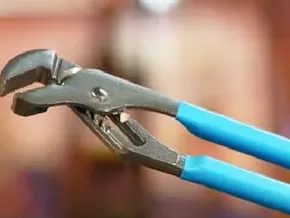
Slip joint pliers are the Swiss Army knife of metal connectors. You can grab and handle anything that needs to be twisted, bent or held. These are simple tools, but cleverly designed. Pivot point sliding. This dynamically changes the width of the chin.
There are two types of teeth in the jaw. Please look forward. These little teeth are perfect for small things. nail. small screw. small hardware. Back to the handle. The teeth become thicker and thicker. It bites large nuts and bolts. You can adjust the distribution by sliding the joint. There is an opening in the neck that allows it to snap into place. Two settings. Small or big?
Where sliding joint pliers are used
It’s useful for more than just turning a wrench. Consider the sink. Change the drain basket? Use them. How to fix a leaking kitchen faucet? It will come in handy. They are also often needed for car repairs. A good grip is needed to secure the hose.
Use in pairs to fasten the nuts. Use another screwdriver to loosen the screws. This is a classic move. Small nails can also be bent straight. Cut the thread. compression light clip. You can also use a chisel or screwdriver handle if you need more leverage.
Some health kits are listed as essential. Do you want to work with wires and pins in tight spaces? They work there too.
Security and restrictions
Don’t treat them like a hammer. It breaks. Or take a break. This metal is not hardened to withstand impacts. Keep away from excessive heat. High temperatures can weaken the properties of the material. You don’t want your tools to fail under pressure.
Comfortable grip that fits comfortably in the hand. But don’t assume they are isolated. It does not protect against electric current. It’s a myth. When working with live wires, use suitable insulated pliers.
There is one downside. They don’t keep things very strict. they slipped. sometimes. If you need a vise-like grip, look elsewhere. It will be temporarily put on hold. Not permanently attached.
Buying guide: What to look for
When shopping, don’t buy the cheapest pair on the shelf. High-quality materials are important. Check the surface. They should be even. There is no warping. The teeth should be sharp. The teeth become dull and slippery. There is a risk of injury if you slip or fall. And frustration.
Open and close the handle. It should work smoothly. There is no wobble in the pivot. If it feels loose, put it back. You want a tool that feels sturdy. It snaps into place and stays there.
Slide presses are versatile, but they also have limitations. Know when to use it. And know when to put it down.
You use these often. Keep it clean. Dry after use. Store in a dry place. Rust can cause tools to break quickly.
Pivot is the heart of the tool. Be careful. Clean it when it gets hard. A little oil goes a long way. But don’t overdo it. You don’t want your hands covered in grease every time you squeeze a bolt.
Think about the work you do. Do you handle a lot of small devices? Buy a pair with beautiful teeth. Are you working with pipes or large fittings? Look for coarse teeth. some


