Stop traditional support. They block your path. It broke with the first strong gust of wind.
There is a better way. This is very clever. Look the part. Works even in small spaces. Do you want to change your garden? Let’s start here.
Standard support issues
Most gardeners reach for bamboo poles or wire cages. This is wrong. Bamboo rots. The wires are rusty. Both were covered in leaves. I spend more time working with plants than growing them.
Another option is vertical gardening. Talk about growing up. It’s more than just a support system. Please train it.
Why the vertical growth is not negotiable
The air circulation kills the disease. It’s simple physics. Phytophthora spreads quickly when tomato leaves come into contact with moist soil. When it grows vertically, its leaves rise above the ground. The sun shines on every leaf. Bacteria have nowhere to hide.
“Vertical gardening is not only about space, but also about your health.”
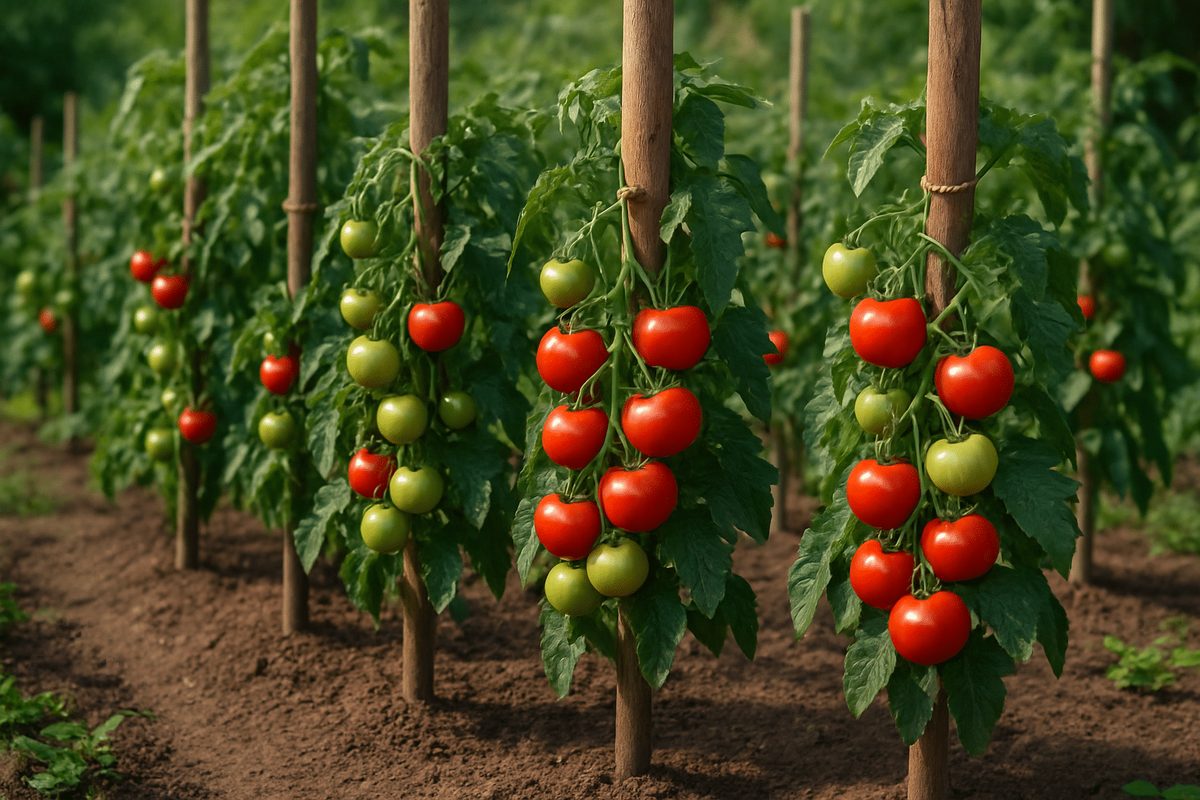
This method also keeps the fruit clean. Dirt stains. Dirt rots. Hanging fruits stay dry.
Required materials
No expensive equipment required. You need two things.
- A strong anchor. This could be a wall. fence. Sturdy pergola beams.
- Support line. Use yarn. Jute. Or a special gardening rope. It must be biodegradable or at least sustainable.
Tie the upper thread tightly. Let it hang at ground level. Attach the base end near the base of the plant.
Step by step installation
Step 1: Choose the right tomatoes
Not all tomatoes are equally effective. Certain varieties are bushier. they stop growing. Does not require high stakes. Indeterminate varieties are cultivated all year round. They grew taller. It will be very heavy. they need your help. Select Indeterminate for this method.
Step 2: Install the wires
Drive a sturdy wooden stake into the ground. Or hang it on a hook on the wall. Continue the wire from the top attachment point to the bottom of the plant. Don’t tie it too tightly yet. Leave some leeway.
Step 3: Plant Deep
Tomatoes prefer deep roots. Fill two thirds of the stem. Remove the lower leaves. This allows roots to grow along the buried stem. A deep root system supports tall plants.
Step 4: Training
As the plant grows, wrap the main stem with wire. Don’t tie any knots. Keep the plant on a leash. Become an anchor yourself. Check once a week. Directs new growth upwards.
Step 5: Trim Height
Remove the sucker. It is a bud that grows between the main trunk and the branches. they consume energy. They create density. I want the main body. I want height. I need air.
Avoid common mistakes
- Use weak materials. The thread stretches. If it stretches, the plant falls over.
- Planting too close to each other. Allow 24 inches of space for each plant. No 6.
- Never mind the wind. Even upright plants can lean over if the foundation is weak. Build a solid foundation.
Results
your garden looks beautiful. Your tomatoes are hanging in the sun. pick fruit at your waist
Forget the stakes. They take up space, rot and eventually explode under the weight of a large crop of tomatoes. If you’re tired of bending over and tying stems to rigid bars, there’s a better way. This is called horizontal trellis farming or hanging wire farming. This is not just a trend. This is a practical conversion suitable for urban balconies and small garden beds.
This method originated in professional greenhouse farming. Ideal for home gardens where space is limited. Instead of pushing the vine up with a stick, guide it along a horizontal or hanging line. The result is a cleaner plant, better air flow and fruit that hangs at eye level.
How a suspended network system works
The logic is simple. You can replace vertical columns with solid lines.
- **Anchor rope. ** Attach a sturdy rope to the beams, arches or metal frame of the pergola. It must be tall enough to support the full length of the indeterminate variety. These plants can reach a height of 2 meters.
- **Control arm. ** When the head bun has grown, wrap it loosely around the string. If necessary, use soft clamps or rubber rings to hold it in place.
- **Let’s climb. ** The plant moves upwards without resistance. Branches spread along the line.
This is perfect for indeterminates. These varieties grow and bear fruit throughout the season. The stakes support the plant but do nothing to the sides. The horizontal lines support the whole structure.
Why this method saves space and reduces disease
Vertical stakes abound in the garden. Each plant needs its own sphere of influence. A horizontal grid changes the geometry. As the plant grows, its weight is distributed along this line. Plants can be planted close together. This is important because with balconies and raised floors, every square inch counts.
Better distance means better airflow. When air passes through the leaves, fungal diseases such as late blight are less likely to spread. If the leaves get wet and stagnate, they can cause rot. Withered leaves are healthy leaves.
Harvesting is also easier. The tomatoes are hanging down. No need to dig through tangled vines to find mature vines. They are visible. It is achievable.
Real materials are needed
There is no need to purchase a commercially available kit. Collect the following items.
- Support structure: Wooden beams, metal arches or existing trellises.
- Growing wire: Garden wire, coir rope or braided rope. Avoid using wires. You can cut inside the stem.
- Soft Ties: Rubber bands or special plant clips.
- Optional trellis netting: Use this on lower branches to catch early fruit before the main stem is fully mature.
All of these can be reused. In dry conditions, the rope lasts for several years. Cheap and durable.
Technology management steps
Success depends on routines.
**Cut regularly. ** Amorphous tomatoes develop “vacuums” between the main stem and branches. Remove them. If you leave it alone, the plant will become a mess. Block light and air.
Lead the main stem weekly. Walk around the factory once a week. Wrap the tip around the support wire. Do not tie it too tightly. As the stem thickens, it must expand. If the tie is too tight, it can suffocate the plant.
Check the tension. Make sure the mains lead is tightly tightened. If it sags, the weight of the fruit will cause everything to fall. Use buckles or tight knots to maintain tension.
** Be careful with water. ** Pot plants dry out faster than above ground plants. The wind hits the bare leaves even harder. Check the humidity level daily, especially during the hot summer months.
**Install as soon as possible. ** Don’t wait to install until your facility is very large. Place rows before or immediately after planting. Young stems are flexible and easy to grow. The old stems are brittle and break if you use too much force.
Ideal for greenhouses and small spaces
If you have a greenhouse, use this system. It is the standard for commercial growers because it maximizes vertical space. Connect the wire to the roof structure. Plants can climb freely. The profit per square foot is higher.
Even in a small space, you can change the look of your garden. The arch covered in green leaves and red berries is eye-catching. It turns your crop into a living sculpture. It can be used for both decoration and food.
Conclusion
For serious producers, traditional betting is outdated. The horizontal trellis method offers more space, less disease and easier harvesting. Pruning and training require more attention. But the payoff is healthier plants and a cleaner garden. Please try this season. See how much easier your job becomes when you follow your plant’s natural growth pattern instead of the other way around.