The baby monitor arrives before the crib does. One day you are a couple in a starter bungalow; the next, you are a family of three staring at a floor plan that suddenly feels like a cage. You love the house. The neighborhood is good. The lot is big enough to justify an addition. But the bank account is not.
You could knock down the wall of the spare bedroom. You could expand the kitchen. You could tack on a half bath and a proper nursery. It sounds like a dream renovation. It also sounds like a financial nightmare. So where does the money come from?
Homeowners often look to home equity loans to bridge the gap between their current assets and their future needs. This is not magic money. It is borrowing against the value you have already built up in your property. Understanding how these loans work is the only way to avoid drowning in debt while trying to build a safe space for a newborn.
What Is Home Equity?
Before you sign any papers, you need to understand the collateral. Equity is the difference between your home’s current market value and the amount you still owe on your mortgage. If your house is worth $400,000 and you owe $250,000, you have $150,000 in equity.
Lenders do not give you all of that. They typically allow you to borrow up to 80% or 85% of your home’s value, minus what you owe. This creates a borrowing limit. It also creates a risk. Because your home is the security, failure to pay can result in foreclosure. This is not a credit card. The stakes are higher.
The Mechanics of Borrowing
You have options. The market offers several ways to tap into that equity. A traditional home equity loan gives you a lump sum with a fixed interest rate. You know exactly what you will pay every month. This works well for a single, large expense like a roof replacement or a major addition.
A Home Equity Line of Credit (HELOC) operates differently. It is more like a credit card. You have a credit limit. You draw money as you need it. Interest accrues only on what you use. HELOCs often have variable rates. This can be cheaper initially, but it can also skyrocket if the Federal Reserve raises rates. You need to know which path suits your cash flow.
Why Choose Equity Financing?
Why not just use savings? Maybe you don’t have them. Maybe you are building your emergency fund. Why not use a personal loan? Personal loans usually have higher interest rates and shorter terms. Home equity loans often offer lower rates because they are secured by real estate. They also allow for larger borrowing amounts.
The tax implications are another factor. Interest paid on home equity loans used to buy, build, or substantially improve your home may be tax-deductible. Consult a tax professional. The rules change. What was true five years ago might not apply today.
The Decision Point
Renovating to add a nursery is a practical move. It solves a space problem. It increases the value of your home. But it requires capital. Borrowing against your home is a powerful tool. It can fund a dream renovation. It can also trap you in debt for decades.
You need to calculate

The Second Mortgage Structure
If you need a specific dollar amount for a renovation, a home equity loan—often called a second mortgage—might be your best bet. You get one lump sum. The bank sets a fixed interest rate and a set repayment schedule. You pay it back month by month until the balance hits zero.
This structure is ideal when you already have a contractor’s estimate. You know the number. You know the timeline. No guessing.
Understanding Your Equity
Before you apply, you need to know how much equity you actually have. It is not just your home’s value. It is the difference between that value and what you still owe.
Think of equity like a savings account that grows as your home apprecates and your mortgage balance drops.
Let’s look at the math.
Imagine you bought a house for $350,000. You originally took out a $300,000 mortgage. You have paid down $175,000 of that principal. That leaves a remaining balance of $125,000.
Now, an appraisal comes back. Your home is worth $500,000.
Your equity calculation is straightforward:
$500,000 (current value) – $125,000 (remaining debt) = $375,000 (total equity)
Your equity has grown because the market went up. It is like holding a valuable antique that just hit a bidding high.
Borrowing Against the Asset
This equity is your collateral.
When you take out a second mortgage, you are borrowing against that $375,000. The bank uses your house as a guarantee. If you default on the payments, they do not just take your car or your jewelry. They take the house. You may be forced to sell.
Most second mortgages last between five and thirty years. They are often shorter than your primary mortgage. They are also usually for smaller amounts.
People use them to:
– Consolidate high-interest debt
– Finance a major home addition
– Pay for college tuition
But sometimes, you just want financial flexibility. You see your home’s value rising. You decide to borrow against it to keep cash on hand for other opportunities.
HELOCs and Reverse Mortgages
Home equity loans are not the only way to tap into this value.
A Home Equity Line of Credit (HELOC) works differently. Instead of a lump sum, you get a credit limit. You borrow what you need, when you need it. Interest accrues only on what you use. This can be better for ongoing projects where costs might fluctuate.
Then there is the reverse mortgage. This is for older homeowners. It allows you to convert equity into cash without monthly payments. The loan is repaid when you sell, move, or pass away.
Each option serves a different purpose. For a one-time remodel with a fixed quote, the second mortgage offers predictability. For a rolling project, a HELOC offers flexibility. Know your numbers before you sign anything. Your home is on the line.
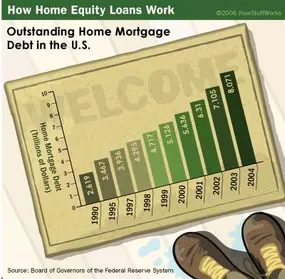

If you have a specific sum in mind for a renovation—say, $20,000 for a new kitchen—you need a tool that matches that fixed need. That is where a home equity loan steps in. Think of it as a second mortgage. You borrow a lump sum upfront. The interest rate is usually fixed. Your payments are equal every month, stretching over a set term, typically 5 to 15 years. It is predictable. Simple. You know exactly what you owe and when you will be debt-free.
There is a tax angle here worth checking. Interest paid on home equity loans may be deductible if the total amount borrowed is $100,000 or less, and if you use the funds to buy, build, or substantially improve the home that secures the loan. Always run this by a tax professional, though. The rules shift.
The Flexibility of a Home Equity Line of Credit
A HELOC operates differently. It is not a lump sum. It is a revolving credit line secured by your home’s equity. Lenders look at your income, credit score, and existing debts. They set a limit based on a percentage of your home’s value.
Think of it like a credit card backed by your house.
Most HELOCs have two distinct phases. First, there is the draw period. This might last five to ten years. During this time, you can pull money out as needed. Some lenders give you a checkbook. Others offer a special card. You might withdraw $2,000 for plumbing repairs in January, then nothing for six months, then $5,000 for window replacement in August. You only pay interest on what you actually borrow. This is useful if you are tackling multiple projects over time. You do not lock up cash you do not need yet.
But there is a catch. During the draw period, your payments might be interest-only. That keeps monthly costs low, but it does not reduce the principal. If you are tempted to dip into that line for non-renovation expenses, be careful. The flexibility is a double-edged sword. It is easy to overspend when the money feels like it is just “there.”
After the draw period ends, the repayment period begins. Now, you can no longer borrow. You must pay back the outstanding balance, usually over a fixed term, like 10 to 20 years. Payments jump significantly because you are now paying both principal and interest. Some lenders allow you to renew the line. Others require a balloon payment. In some cases, you can refinance the outstanding balance into a traditional loan. Read the fine print. The transition from draw to repayment can hit your budget hard if you are not prepared.
Costs and Hidden Fees
HELOC terms vary wildly between lenders. Do not just look at the rate. Look at the fees. You might face:
- Application fees
- Annual membership or maintenance fees
- Property appraisal costs
- Title search and insurance
- Attorney fees
- Points (which can reduce your credit limit)
- Transaction fees each time you withdraw money
Some lenders waive certain charges. Others pile them on. Calculate the annual percentage rate (APR), which includes interest and those fees. A low interest rate means nothing if the closing costs eat your equity.
Ask yourself: Is the repayment period too short for my cash flow? Can I manage the interest-only payments now, knowing they will spike later? If the answer is no, a lump-sum home equity loan might be safer. It offers discipline. You borrow what you need. You stick to a plan.
Reverse Mortgages for Older Homeowners
A reverse mortgage sounds contradictory. The bank pays you. You do not repay it. Not immediately. You do not even need income to qualify. But it is still a loan. And it comes with heavy conditions.
To get a reverse mortgage, you must be at least 62 years old. You must own your home outright, or have a small balance that can be paid off with the reverse mortgage funds. You must live in the home for at least half the year.
This product is designed for retirees who are “house rich, cash poor.” You convert your equity into cash. You can take it as a lump sum, a line of credit, or monthly payments. You keep living in the house. You pay no monthly mortgage payments. The loan balance grows over time as interest accrues.
Do not fall for the idea that you never have to repay it. You do. But you only repay it when you sell the home, permanently move out, or pass away. If you stay until the end, the loan is settled from the sale proceeds of the house.
If your heirs want to keep the home, they must pay off the reverse mortgage. If they cannot, the lender takes the property. If the home’s value exceeds the loan balance, your heirs keep the difference. If the home is worth less than the loan, the lender absorbs the loss (in most cases, thanks to FHA insurance for HECMs). Your heirs are not personally liable for the shortfall.
This is non-recourse debt. The lender cannot come after your other assets. But your equity disappears. As you take money out, your debt rises. Your equity falls. It is the opposite of a traditional mortgage. You are borrowing against your future self. Use this tool carefully. It solves a cash flow problem, but it eats away at the asset you worked decades to build.

Home Equity Conversion Mortgages, or HECMs, hold a unique spot in the lending world. They are the only reverse mortgages backed by federal insurance. That federal seal of approval isn’t just for show. It caps the fees you’ll pay and strictly regulates how much a lender can offer you. In many cases, this insurance makes the HECM the more affordable option compared to private, non-insured reverse loans.
Sure, government-backed reverse mortgages from state or local agencies can sometimes undercut HECM rates. But there’s a catch. Those programs usually come with strings attached. They’re often restricted to specific purposes or targeted at lower-income borrowers. For the average homeowner, the HECM remains the most accessible federal option.
If you’re trying to figure out the numbers, tools matter. A mortgage calculator can help you estimate your potential payout. Compare a standard HECM against older options like the Home Keeper Mortgage from Fannie Mae. Seeing the side-by-side projections might change how you view the debt.
The Hidden Math of Staying Put
Before signing anything, stop and look at the big picture.
Many homeowners face a tough choice when retirement brings unexpected expenses or mounting debt. Selling feels like losing a piece of your history. Or maybe you’re just tired of the physical toll of moving. That reluctance is human. But it’s also expensive.
You need to run the actual numbers.
Calculate the net proceeds from selling your current home. Then, compare that cash pile to the cost of renting or buying a smaller place. Include maintenance, insurance, and property taxes in that new home’s price tag. Often, the math reveals something uncomfortable.
Keeping your home via a reverse mortgage might cost more in the long run than downsizing.
If you sell and move to a simpler, smaller home, you unlock capital. That cash can supplement your retirement income. It can also protect your heirs from inheriting a massive loan balance. You avoid the interest accumulation that defines reverse mortgages.
There are other housing alternatives you might not have considered. Senior living communities. Co-ops. Smaller condos with lower upkeep. Exploring these options through resources like AARP can provide clarity. You might find that selling isn’t a loss. It’s a strategic financial move.
Read the Fine Print
The details matter. A reverse mortgage isn’t a gift. It’s a loan that grows over time. The interest compounds on the balance, eating into your equity. Make sure you understand how the loan balance is calculated. Know when the repayment is due. It’s not always when you die. It can be when you move out for more than six months in a year. Or when the home is no longer your primary residence.
Don’t rush. Take the time to read every clause. Ask questions. If a lender pressures you to sign quickly, step back. These decisions have long-term consequences for your estate and your daily cash flow.

Legal Protections for Home Equity Borrowers
The Consumer Credit Protection Act (Truth in Lending Act) exists to stop predatory lending in the housing market. Passed by Congress in 1968, this federal law mandates that lenders disclose the full cost of home equity plans. This includes the annual percentage rate (APR), payment schedules, variable rate details, and any hidden fees. The law gives you a three-business-day right of rescission. This clock starts the moment you open the account. You can cancel the loan within that window by notifying the creditor in writing. Once you do, the lender must release the security interest on your home. They must also return all application and loan fees.
Why does this matter? Second mortgages often attract desperate borrowers. Some unscrupulous lenders target this vulnerability. They offer unaffordable terms or sneakily alter agreements. The law is your shield against these tactics.
If the three-day window closes and you realize you’ve been exploited, act quickly. Report the lender to the Federal Trade Commission. You can also reach out to consumer protection agencies, housing counselors, or your state bar association for legal referrals. These steps help protect your equity and your future.
Fixed vs. Variable Home Equity Rates
Choosing between a home equity loan and a line of credit (HELOC) comes down to one thing: how you handle interest rates.
A traditional home equity loan offers a fixed interest rate. Your monthly payment stays the same. You know exactly what you owe. Predictability is the primary benefit.
HELOCs usually come with a variable interest rate. This rate is tied to a public index, like the prime rate or the U.S. Treasury Bill (T-Bill) rate. These rates move when the Federal Reserve adjusts its rates. This introduces uncertainty. Your monthly payment could go up or down. However, there is flexibility. Many HELOCs let you pay interest only. Some allow you to pay down principal too. You can choose based on your cash flow.
The math behind a variable rate involves a margin. Lenders add this margin to the index rate. The margin is measured in points. If the prime rate is 4.5 percent and your lender adds a one-point margin, your actual rate is 5.5 percent.
There are caps on variable rates. A cap limits how high the rate can climb during the plan’s term. Some plans also limit how much the rate can drop. If your rate hits the cap, some lenders may freeze withdrawals. Others allow conversion. You can switch from a variable rate to a fixed rate. Some lenders let you convert part or all of the debt into a fixed-term installment plan. Not all lenders offer this option. Read the fine print before you sign.
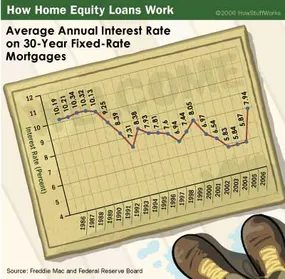

Home equity loans and lines of credit don’t just hand you cash and walk away. They come with strings attached, specifically regarding how and when you pay it back. The terms dictate your reality. Some structures are simple. Others are traps.
Most plans require interest-only payments during the draw period. You pay the cost of borrowing, but the principal stays intact. This is fine until the clock runs out. Then the balloon payment hits.
The Balloon Payment Trap
A balloon payment is a lump-sum due at the end of the loan term if the principal hasn’t been fully amortized. It’s not a typo. It’s a massive check.
You have three options when that date arrives:
1. Pay it with savings.
2. Refinance into a new mortgage.
3. Take out another loan from a different lender.
Fail to do any of these, and you risk foreclosure. Your home becomes collateral. Again.
Flexibility is your shield here. Many lenders allow extra payments toward the principal. Use them. Paying down the core debt prevents that final scary moment. If you sell the house before the term ends, the loan must be repaid in full. You can’t walk away from it just because you moved.
How to Spot a Predatory Lender
Before you sign anything, ask if you can actually afford the debt. Is your job stable? Can you handle higher monthly costs if rates rise?
If money is tight, talk to a credit counselor. The Department of Housing and Urban Development (HUD) lists approved agencies. They help people struggling with mortgage payments. Don’t skip this step.
Only take a home equity loan for a specific reason. Renovations? Debt consolidation? Education? Not “just because.” A HELOC (Home Equity Line of Credit) feels like a credit card. It’s not. Treating it like one can drain your equity and wreck your finances.
Shopping around is non-negotiable. Predatory lenders target the elderly, low-income borrowers, and those with bad credit. They offer terms that look good until they aren’t.
Ask friends. Check reviews. Verify the lender’s reputation. You don’t want a shark. You want a partner in your financial structure.
Comparing Loan Offers Like a Pro
Interest rates fluctuate. Fees pile up. Variable rates add uncertainty. How do you compare apples to oranges?
Use the FDIC’s loan comparison worksheet. It forces you to list every cost. Origination fees. Closing costs. Points. It organizes the chaos. It highlights the true annual percentage rate (APR).
Negotiate. Seriously. Lenders expect it. Tell them you’re comparing offers. Ask them to drop fees. Ask for better rates. Make them compete. It’s like buying a car. The sticker price is a starting point, not a final verdict.
The Good Faith Estimate
Once you pick a lender, demand a good faith estimate (GFE). By law, they must provide it within three days of your application.
Read it. Every line.
One week before closing, call them again. Ask if anything changed. Did fees go up? Did the rate shift? If the numbers look different, stop. Ask why.
Get a second opinion. An accountant or tax attorney can spot red flags you might miss. Don’t sign if you’re confused. Don’t sign if you’re rushed.
Watch for blank fields. If a form has blanks, draw a line through them and initial. Your lender might say it’s standard. It’s not. It’s a risk. Never leave a contract open to interpretation.
Why Loan-to-Value Ratio Matters
The loan-to-value ratio (LTV) is the math behind your risk. It’s the amount you owe divided by your home’s value.
Lenders prefer an LTV below 80%. Why? It’s safer for them. It means you have skin in the game.
Here’s the math:
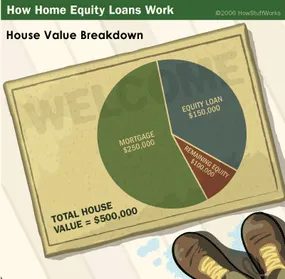
You owe $250,000 on a $500,000 house. Your LTV is 50%. Safe.
You get a second mortgage for $150,000.
Total debt: $400,000.
New LTV: 80%.
That’s the line. Go over it, and repayment becomes harder. Your home ownership is jeopardized.
Don’t borrow more than you need. Don’t accept terms you can’t sustain. Even if the lender promises favorable conditions, a high LTV can sink you later.
Keep your ratio low. Keep your payments manageable. The goal isn’t just getting the cash. It’s keeping the house.
And if the numbers don’t add up, walk away. There’s always another way. Or another day.
Keep the Loan-to-Value Ratio Under 80 Percent
Steering clear of excessive mortgage debt is not just financial advice—it is survival strategy. The golden rule for home equity borrowing is simple: keep your loan-to-value (LTV) ratio under 80 percent.
Some lenders will push past that threshold. They might even offer you a loan for more than your home is currently worth. Do not take it. These predatory structures come with steep price tags. Higher interest rates. Mandatory mortgage insurance. And the nightmare scenario of being unable to sell your home because you owe more than the property sells for.
When you borrow against your equity, you are leveraging your biggest asset. Do not leverage it into a trap.
How Home Equity Loans Actually Work
A home equity loan is effectively a second mortgage. You borrow a lump sum against your home’s equity and repay it over a fixed term at a specific interest rate. It is predictable. It is rigid.
But how much can you actually borrow?
Lenders typically allow you to tap into 80 to 90 percent of your available equity. The exact number depends on your credit score, income, and the lender’s risk appetite. Let’s look at the math.
Say you bought a house for $350,000. You have paid down $175,000 of a $300,000 mortgage. You still owe $125,000. A recent appraisal values the home at $500,000. Your equity is $375,000 ($500,000 minus the $125,000 debt). A lender might let you borrow 85 percent of that $375,000. That is $318,750. Do not spend it all. Keep a buffer.
Home Equity Loan vs. Line of Credit: Which Fits Your Project?
You are weighing your options for a renovation or a major expense. Which tool do you pick?
Home Equity Loans
Best for fixed monthly repayments. You know exactly what you need. You know exactly what you will pay. If you are replacing a roof or adding a bathroom, the cost is likely a one-time figure. A lump-sum loan fits this perfectly.
Home Equity Lines of Credit (HELOCs)
Best for ongoing costs. Think of it as a credit card secured by your home. You draw funds as you need them. This is better if your project scope might change. It offers flexible access. But remember—variable rates can creep up.
The terms vary wildly. Read the fine print. Find the structure that matches your cash flow, not just your borrowing capacity.
Can You Use a Home Equity Loan for Anything?
Legally, yes. You can use the funds for anything.
In practice, most homeowners use them for:
– Large expenses
– Home renovations
– Medical bills
– Education costs
There are no restrictions on the usage. There are only consequences if you mismanage the debt. Use it to increase your home’s value or stabilize your life. Do not use it to fund a vacation.
What Is the Average Interest Rate?
There is no single average. The rate you get depends on your personal financial profile and the current market conditions. A strong credit score and stable income will secure you a better deal. A weak credit history will result in a higher rate.
Check current market trends. Compare lenders. Do not accept the first offer you receive.
More Resources on Home Equity
If you want to dig deeper into how these financial tools fit into your broader picture, check out these related guides:
- How Mortgages Work
- How the Fed Works
- How Banks Work
- How House Construction Works
- How Credit Reports Work
- How REITs Work
- How Credit Scores Work
- How Rent To Own Homes Work
- How Credit Cards Work
Useful Tools and Calculators
- GetSmart Mortgage Loan Calculator
- Prime Rate – Rate, Definition & Historical Graph
Sources
- “A Rising Debt Loan.” AARP.
- “A New Kind of Loan: In Reverse.” AARP.
- “About Reverse Mortgages for Seniors (HECM).” U.S. Department of Housing and Urban Development.
- “FDIC: Putting Your Home on the Line is a Risky Business.” Federal Deposit Insurance Corporation.
- “Another Option: Home Equity Loans.” Motley Fool.
- “Borrowing Against Your Home.” Motley Fool.
- “Home Equity Basics.” Bankrate.com.
- “Reverse Mortgage FAQs.” National Center for Home Equity Conversion.
- “U.S. Treasury Bill Definition.” investorwords.com.
- “The Difference Between Home Equity Loans and Lines of Credit.” Wells Fargo.
- “What is a Loan to Value Ratio?” DoItYourself.com.
- “Home Equity Product Guide.” GetSmart.