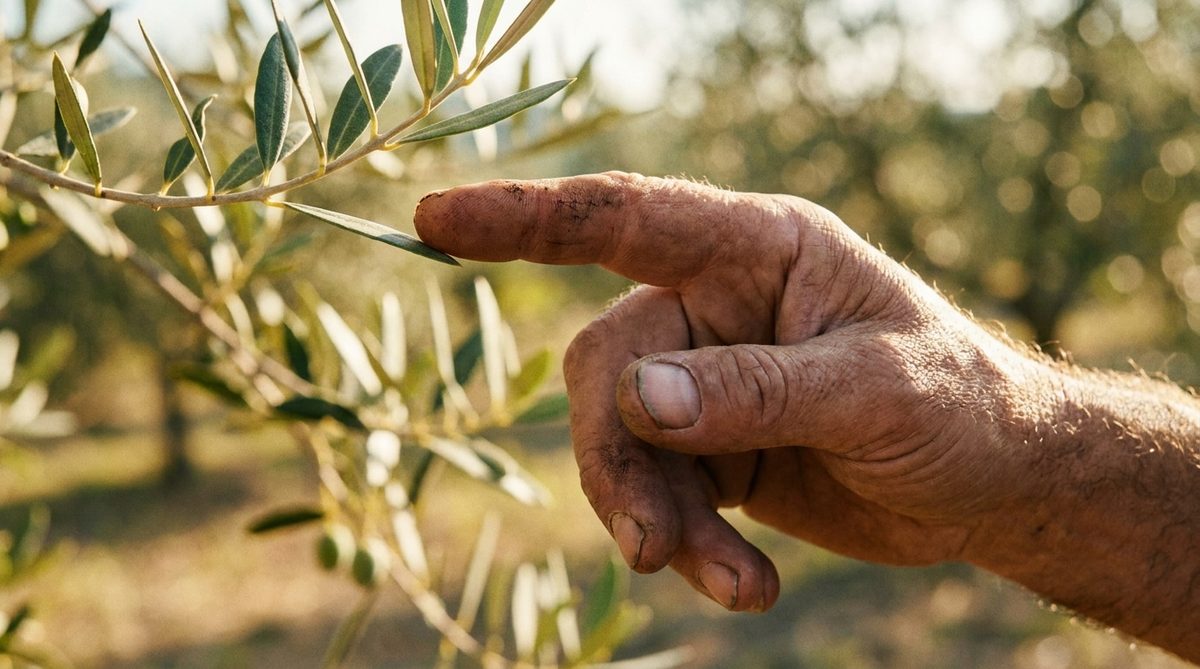
Most homeowners treat their olive trees like topiary sculptures, obsessing over a perfect, spherical exterior. It looks nice in a catalog. It’s also wrong.
You are choking the tree.
By focusing on the outside, you create a dense shell that blocks light and air. The inside rots. The fruit shrivels. The real secret to a healthy olive tree isn’t how it looks from the street; it’s what happens in the center. Old-world wisdom prioritizes thinning from the inside out. This method ensures vigorous growth and heavy yields without chemicals.
Here is how to do it right.
Timing Is Everything: Wait Until Mid-May
When you prune matters as much as how you prune. Do not rush in early spring.
Wait until mid-May.
By this time, the white blossoms have fallen. The tiny green fruits are forming. The tree has finished flowering. Pruning now allows the cuts to heal quickly. It respects the biological cycle. The tree is ready to direct energy into fruit development, not just leafy regrowth.
Clear the Dead Wood First
Start with a sanitary clean. You do not need expensive sprays or complex treatments. You need shears and eyes.
Look for dead wood. Look for branches damaged by winter frost or pests. Cut them out. Remove them completely.
This does two things. It stops diseases from spreading. It opens up the structure. You are essentially decluttering the tree’s skeleton. No pesticides required.
Remove the “Gourmands” (Suckers)
You will see thick, vertical shoots shooting up from the base of the trunk or the main branches. These are called suckers, or gourmands.
They are thieves.
They steal sap and energy from the branches that actually produce olives. Cut them off. Make the cut as close to the origin point as possible. Redirect that energy back to the fruiting wood.
Open the Center for Light and Air
This is the core of the method. You must create a void in the middle of the canopy.
Look for branches that cross over each other. Look for twigs rubbing against one another. Wind will make them chafe. The bark will break. Open wounds invite bacteria and fungi.
Remove the weaker branch. Keep the one that is healthier and better oriented. Your goal is to let light penetrate to the lower branches.
The Airflow Rule
Air is your best fungicide.
When you thin the interior, you create a draft. The wind moves through the center of the tree. This dries out morning dew and spring rain moisture.
Fungi love damp, stagnant air. They hate moving air. By opening the heart of the olive tree, you make it hostile to diseases like Olive Knot or Peacock Spot (Cycloconium oleagineum ). The tree breathes. It stays dry. It stays healthy.
The One-Third Rule
Do not be aggressive.
There is a golden rule passed down through generations: Never remove more than one-third of the total foliage in a single pruning session.
Exceeding this limit shocks the tree. It triggers a survival response. Instead of producing fruit, the tree will pump out water sprouts and leaves to recover. You will lose your harvest. You will damage the tree’s long-term health.
Use Sharp, Clean Tools
Your tools matter.
Dull shears crush stems. Crushed stems take longer to heal. They invite infection. Use sharp bypass pruners. Clean them between trees if you are working on a grove to prevent spreading disease.
Respect the tree’s natural form. Make clean cuts. Step back. Look at the whole shape.
The result is not a ball. It is an open, airy vase. The olives ripen evenly. The tree lives longer.
But there is more to the seasonal routine than just cutting. Knowing when to stop is just as important as knowing when to start.
The cut is done. The tree looks different now, but it’s a good kind of different. You’re not dealing with shaved stumps or tangles. You can see the structure. The outer layer of green still hangs heavy and majestic. But inside? It breathes.
The center of the canopy is no longer a dark, stagnant cave. It’s open. Clear. Sunlight now reaches the lower branches. This is not just aesthetic. Sunlight is fuel. It affects every olive that forms this season. Better light means better sugar conversion. Better ripeness. They don’t just wait for the harvest; you’re engineering it.
Heat resistance and water efficiency
Olive trees are tough. But they are not invincible. Before this cut, heat and moisture were trapped in the dense interior. A breeding ground for fungi. A sponge for water that never dries up.
Now the air flows through the trunk. The useless branches – rubbing against each other, growing inwards – are gone. It’s not just about shape. It’s all about survival during the July heat wave.
Depleted of dead weight, it no longer has to struggle with its own density. Water consumption decreases. Not because you’re neglecting it, but because the tree isn’t wasting resources trying to cool an overheated core. The roots don’t have to work as hard. The canopy regulates its own temperature. Drought stress becomes manageable. The tree stands taller as the thermometer rises.
Long-term health and planning for the future
This was not a one-time solution. It’s the rhythm. By doing this pruning right after the spring flowers fade, you can give the tree time to recover before the stress of fruit production hits. You preserve the wood. You keep the center open. You create a natural barrier against wind and diseases.
The open canopy is a protective shield. It reflects heat instead of absorbing it. It pours down the rain instead of taking it.
What next? You’ve got one major tree handled. The olive grove has been prepared. The air is clear. Is there an old specimen in the back corner that is starting to rot at the base? The one you ignored because it looked “good”? It’s time.


