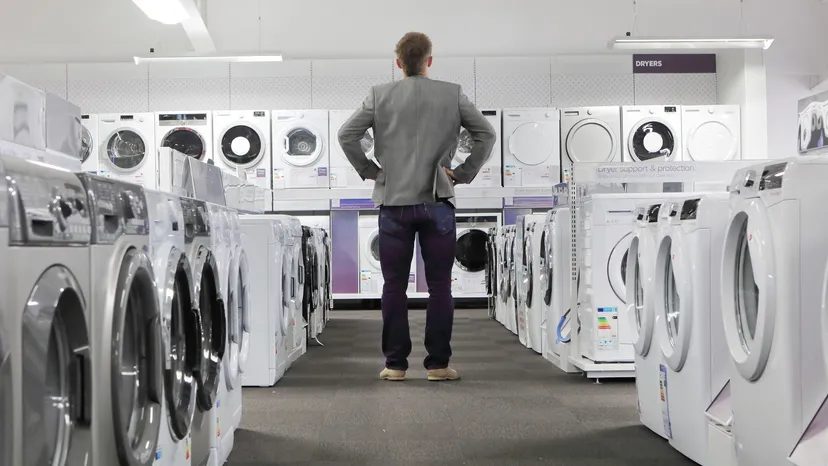
You load the laundry. You press start. You get clean clothes. It’s a ritual you’ve probably repeated hundreds of times without even thinking about it. But have you ever stopped to look at the humming black box in your utility room? What’s really going on in this spinning drum?
It’s not magic. Mechanical engineering does the hard work.
Consider physics. How does it spin clothes at a speed that would turn your head into a smoothie, while keeping liters of water safely inside? Why is the whole unit so incredibly heavy? And that mysterious turn of the agitator – how does it know when to change direction?
We pull back the curtain. No jargon. No corporate fluff. Just the rough mechanics of a washing machine. We break down the cleaning process, analyze the internal components and reveal the water, power and logic that make it all possible.
Agitation and rotation mechanics
Let’s start with the core function: cleaning. The heart of most conventional washing machines is the agitator or drum itself. In top loaders, the agitator moves back and forth. It doesn’t just spin; it swings.
The agitator changes direction to create a turbulent flow of water. This churning action forces the water and detergent through the fabric fibers.
It’s simple physics. Water carries dirt away from clothes. The agitator ensures that the water doesn’t just stand still. It churns. It pushes. It pulls.
But the spin cycle is where the real engineering comes into play. When the machine goes into high speed, the drum rotates at hundreds of revolutions per minute. Centrifugal force pushes the laundry against the wall of the drum. Water lacking the same mass is forced out through the small holes in the drum.
How do you prevent water from spilling into your basement? Seals.
Specifically, a robust shaft seal. This component is located between the rotating drum and the stationary motor. It is a critical barrier. If it fails, you have a flood on your hands. That’s why these machines are so heavy. Counterweights – usually blocks made of concrete or cast iron – are bolted into the cabinet. They stabilize the rotation. Without them, the machine would run across the floor and shake itself apart.
Plumbing and Water Control
You might think the magic is in the drum. It’s actually in the pipes.
A washing machine is basically a controlled leak. Water enters through a fill valve, which is controlled by timers or electronic sensors. The valve opens. Water flows in. The valve closes. Precise measurement are important. Too little water and your clothes won’t get clean. Too much and you waste resources without cleaning power.
The drain system is equally important. A pump, usually powered by the same motor that turns the drum, pushes the dirty water out. It’s a straightforward mechanism. The impeller rotates and creates pressure. The water flows from the tub through a hose to the drain.
But wait. Why does the water stop when you pause the cycle? The fill valve closes. The pump stops. The logic board cuts off power from the motor. Everything is controlled by the central brain – be it a mechanical timer or a microprocessor.
The Drive System: Belt vs. Direct Drive
How does the motor