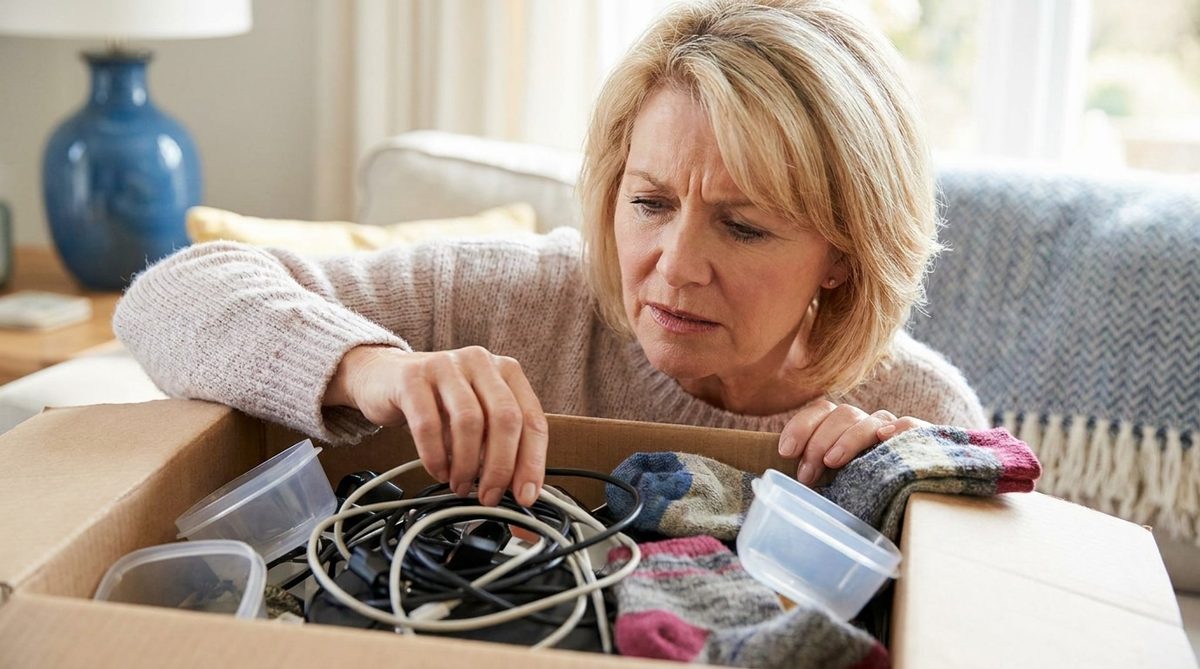
They pile up in the corner. They are hidden in the back of the closet. They hang on a shelf marked “temporary” and have somehow been preserved for five years. These “just in case” items not only mess up your floors, they can also weigh you down.
In most homes, the same cycle repeats itself. You hold onto a nearly empty bottle of shampoo. There is a mysterious cable whose device is unknown. You haven’t worn a coat since last winter, and you promise to get rid of it later. The result? Storage saturation. Overflowing surfaces. A vague sense of chaos, although on the surface things appear to be “mostly” okay.
Here is the reality check: most of these things are useless. They are regret-free to discard.
By sorting with method, every room breathes. Cleaning only takes half the time. Your home will become simple and livable again.
Why “just in case” stuff consumes mental energy
Keeping things you never use can create a false sense of security. The idea feels safe. However, this object performs no real function. This accumulation happens silently. Small touches add up, opening a single cabinet feels like a mental test.
These signs are easy to spot. This is an “almost empty” product. A project that aims to “one day solve this problem”. “This may be useful” box. These phrases repeat like a stuck record.
You can quickly eliminate the noise by using a simple 30-second rule: “Does this project work in its current form?” Would you buy it again tomorrow without hesitation?
If the answer is no, remove it from the circuit. Effective cleaning depends more on concrete practicality than guilt. That is where you find instant calm.
Products to be disposed of immediately: Dangerous or ineffective
Some items, you shouldn’t even “wait for the right time”. They become ineffective or problematic. Old, almost empty cleaning products are a good example. They take up the reserved space, but not enough for actual cleaning.
Group things that can be done quickly. Dispose of the unusable dregs. The same logic applies to medicines. Do not leave expired or opened medications in the bathroom cabinet without a valid prescription. Return unused medications to the pharmacy through appropriate waste channels.
Beauty products are also a trap. The smell of the cream can still be pleasant. This does not mean that it is safe or effective. Separated texture. Changed scent. A jar opened too long. These signs are enough to judge.
In maintenance, worn-out sponges and rags are deceptive. They create the illusion of cleaning while spreading dirt around. You have to rub harder to get mediocre results. Replacing worn sponges will immediately save you time. Prevents unnecessary friction.
The right move? Keep little. Keep it effective. Keep only what is really useful.
“One Day” wardrobe: Textiles that define your wardrobe
Clothes that I haven’t worn in over a year are taking up space in my everyday clothes. It replaces the comfortable, easy-to-wear clothes you really need in the morning. When your closet is full, the feeling of having “nothing to wear” paradoxically increases.
The ranking is determined based on certain criteria: Conditions. comfortable. ok Actual frequency of use.
The same logic applies to orphaned or torn socks. It’s rare to find a friend. If you can’t find it right away, keeping it for months is a waste of time. Rule of thumb: Keep a “single” package in the short term. Then decide. Don’t look back.
Damaged or mismatched hangers appear smaller. However, clothes can slip. They put a mark on their shoulders. They made a mess in the closet. A uniform set of hangers keeps everything visible. It protects the fabric.
Two decisions are enough. Remove bent, stuck or damaged parts. Limit the number of hangers to the actual volume of the closet. Less daily friction means less dirt. When storage runs naturally, maintenance runs effortlessly.
Technology disruption: There is no future for cables and boxes
Damaged or unused electronics often cause disappointment. “I’ll return it.” “I’ll donate it.” “I’ll keep it for parts.”
But if the repairs don’t start soon, they probably won’t be finished. The best approach: Decide to take action now. Please throw it away at the collection point. Schedule repairs and record actual dates. Or remove it entirely.
The most common situation is still that there is no device in the charger box. Multiple USB cables. Unknown adapter. An old charger for a cell phone that disappeared years ago.
Easy sorting. Only store content that matches the devices currently in your home. Mark the required chargers to avoid duplication.
Keeping boxes and packing materials “just in case” is the perfect excuse to store empty space. a cardboard box. Styrofoam. Bag. “Clean” packaging.
Bulk only unless an immediate return or warranty claim is required. Mobile access is not supported. Moving requires decent boxes, not just surplus.
Clean storage first protects currency and readability. Technology projects either work or die.
Throw away paper records that are no longer needed
There are ways to copy paper. Scanned administrative documents. Expired receipt. They piled up in the box to the point where the handles wouldn’t close. The goal is not to destroy everything in anger. This way we can keep the content you really need and find it in 10 seconds.
Group all your content by topic. residence. Tax. health. vehicle. Eliminate all duplicates. Throw away everything that is not useful to you at the moment.
Next, let’s look at the living room. old magazine. old catalog. They promised to have a book club in the future, but it never happened. You can leave provocative questions. But the pile of stuff three years ago is no longer just decoration. It will become furniture. Removing this buildup during spring renewal adds more than just surface area. This allows the actual design to breathe.
Seasonal decor: Box of Destiny
There are seasonal decorations here. broken wreath. I used half of the candle. Damaged ornaments. Keep a copy in a box for 12 months each year.
Store your essentials. If you’re afraid to open your storage box, you’re storing the wrong things. The fun of decorating comes from actually seeing things instead of looking for them in the dark.
Here is a non-negotiable list of things you need to remove from your home to complete the cleaning. Remove them. Organize them into one short session. Discard it immediately.
*Anything left at home must not be returned under any circumstances. *
- The old cleaning supplies are almost empty
- Expired medicine
・Medicines that have been opened but have no history of use - I wore that outfit 0 times last year.
- Lonely orphan socks
- A hole in the socks
- Damaged clothes hanger
- Additional hangers that do not fit
- “Just in case” box
・Useless packaging (cardboard, styrofoam) - Damage to electrical equipment
- Unused gadgets
- No compatible device charger
- unknown adapter
- Outdated beauty products
- Worn sponge
- The cloth is too worn to be cleaned.
Why lightness is more important than space
Lighter homes rarely start major renovation projects. It starts with a simple decision. There are no internal negotiations.
When you dispose of expired items. It is ineffective. Sulfur. It “may”. The save mode comes into play again. It makes your everyday life easier.
The real benefit is more than just a few extra centimeters of shelf space. This is clarity. You’ll find things faster. It can be maintained better. Breathing becomes easier.
Once classification begins, the problem persists. What things in your life are really valuable? The ones you serve today. Not those that serve a hypothetical future.
The pile is shrinking. The room opens. What’s left?


