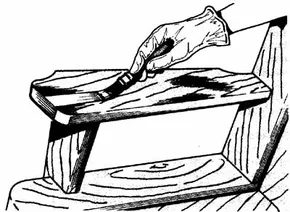
Bleaching is not a standard treatment for refinishing. This is a rescue mission. Can be used when wood does not meet your needs. black rings from water. Ink splattered. Patchy blotches where old stain refused to come off. Or in the case of oak, walnut and rosewood, the nightmare scenario is that the old filler stubbornly remains after removal. This is also the only way to unify a piece made from mismatched woods. Lighten the dark wood to match the light. Make them look like they belong in the same tree.
But not all wood plays nice. Cherry wood and satin wood? Skip. They react poorly. It is almost impossible to evenly bleach bass, cedar, chestnut, elm, rosewood, etc. Pines and poplars have become so pale that bleach just kills them. Birch, maple and walnut can also be used, but they lose their natural character. An unusual wood like rosewood or teak? They are rarely useful. Stick to ash, beech, gum, and oak. These woods accept the chemical change without falling apart.
Choosing the Right Chemical Agent
You don’t need a hammer to crack nuts. Choose bleach based on damage.
Laundry Bleach is an entry-level option. It can solve most everyday refinishing issues. Ink? Water spots? Slight discoloration? This gentle solution works. It does not completely change the tone of the wood, but it is enough to blotchy patches or residual stain marks. Try this first. Powerful chemicals carry risks. If you can solve this problem with laundry bleach, you don’t have to worry about it.
Oxalic acid is used to solve certain difficult problems. Black water marks? That’s its specialty. It also reverses chemical darkening. Generally, darkened wood is only encountered if a previous restorer has used strong lye or ammonia (chemicals that DIYers should not use in the first place). Oxalic acid is available in powder or crystal form. Note that you can bleaches out old stain across the entire surface. If you use this, it’s best to work the entire piece to avoid a patchy mess. Open-grained trees, such as oak, are more effective than dense-grained varieties.
Two-Part Wood Bleach is heavy artillery. Use when dark wood tones need to be lighten the dark wood to match a room full of blond furniture. Completely removes the natural color. Very expensive. It’s powerful. It demands respect. Use rubber gloves. Wear safety glasses. This is not some random weekend project.
Preparation and Safety Protocol
The results are permanent. You can restain if you go too light, but uneven bleaching isn’t easy to fix. If the color is spotty, you’re stuck as is.
Start with clean wood. Touch it as little as possible. Oils from your skin can interfere with the chemical reaction. The bleach should penetrate evenly.
Test before committing. Use a scrap piece of the same wood or a hidden spot on the furniture. Watch how it reacts. Soft woods react fast. Hardwoods take time.
Bleach is corrosive. May damage skin, eyes and lungs. Ventilate your workspace. Open windows. Use a fan. Use protective equipment. Follow the manufacturer’s instructions exactly. If it gets on the skin, wash it off immediately.
Application and neutralization
Use a synthetic-bristle brush. Natural bristles will rot in the chemicals. Apply bleach along the grain of the wood. Wet the surface evenly. No dry spots. There are no puddles.
After the treatment time has passed, wipe the wood with a damp cloth. Next, the important neutralization phase begins. Bleach is still effective unless neutralized. This will eventually damage the wood fibers.
- Laundry bleach: Use a borax solution.
- Two part bleach: Use a borax solution.
- Oxalic acid: Use ammonia solution.
Clean the wood carefully with a neutralizing agent. Do not soak. Then rinse with clean water. Wipe dry with a soft cloth. Allow the piece to rest for at least two days before sanding, staining or finishing. Rushing the process will ruin your work.
How to use laundry bleach to remove stains
Apply bleach as a solution. If you want an overall brighter look, cover the entire surface. When targeting localized blemishes, focus on areas with uneven color.
It works instantly. Within 1-2 minutes the stains start to disappear. If you want to remove old stains completely, wipe off the bleach with a damp cloth after the stain has faded.
If you are partially bleaching, wait until the treated area matches the color of the surrounding wood before reapplying the bleach to the entire surface. This allows partial melting of the patch. When the color is even, wipe it off. Finally, neutralize with a solution of 1 cup of borax in 1 quart of boiling water. rinse. Allow to dry. Wait 2 days.
Prepare the oxalic acid solution
Oxalic acid is not corrosive, but it is toxic. Handle with care. Gloves and goggles are not negotiable. Make sure the room is well ventilated.
Stir the saturated solution. Use 1 ounce of powder or crystals per cup of warm water. Stir until dissolved. Prepare enough solution to cover the entire surface to be treated. You can’t do things half-heartedly and expect a clean line.
Neutralizing one-component acid bleach
When you brush the acid solution along the grain of the wood, timing is everything. Soft woods react fast. Hardwoods take time. Let the chemicals sit for about 20 minutes. Wipe clean with a damp cloth. If the color is uneven, apply more. Hardwood processing can take up to an hour.
When the bleaching is complete, wash the surface with clean water. Then there are the security measures. The acid must be neutralized. Mix 1 cup of household ammonia in 2 quarts of water. Use this solution. Rinse with clean water. Dry thoroughly. If you skip this step, the acid will continue to attack the wood and eventually destroy the surface.
Two-part whitening system treatment
Two-part bleach is convenient. They work quickly. These components are labeled “1” and “2” or “A” and “B”. Do not mix until ready to use. Follow the manufacturer’s instructions exactly.
Use the first solution. Leave on for 20 minutes. Apply the second. Usually one layer is enough. If the color of the wood is still too dark, use another treatment. When you’re satisfied, wipe it clean with a damp cloth.
Neutralization is different here. Use a solution of 1 cup of borax in 1 quart of hot water. Rinse with clean water. Allow to dry completely.
Dealing with Raised Grain
Bleaching brings out the grain of the wood. Even if you sand your furniture before you start, the chemicals can still lift the fibers. If this problem is not solved, the final product will be rough. The wood must be dry for at least two days before being touched with sandpaper.
After drying, sand lightly. Use 5/0 or 6/0 sandpaper. be careful. Do not roughen the surface further. Wear a breathing mask. There may still be chemical residues in the wood. Use a vacuum cleaner to remove dust. Wipe with a tack cloth.
Fixing the Gray Cast
Laundry bleach often leaves behind a white or gray tint. This happens because the bleach dries out the fibers on the surface. This is not a disaster. The color of the hardwood disappears when you apply the topcoat.
Soft woods are trickier. A gray tint may be noticeable. Loose fibers may be visible. Rub the wood firmly with #000 steel wool according to the grain of the wood. Cover the entire bleached area. Make sure the color is even. The gray disappears under the final finish.
You’re close to staining. But the next hurdle is sanding. You need a smooth surface before applying the stain or sealer. The next step is to get into tight spots that a regular sander would miss.


